Showing posts with label games. Show all posts

Monday, October 1, 2018

As an artist, it seems like the landscape is ever-changing from simply the tools, to the aesthetic. I intend to be an artist that never wants to stop learning, and as such, I find more and more interesting artists every day. Each artist has a unique insight and point of view, no matter the experience level. New views help open my mind and teach me there are many ways to utilize my skills and I hope that sharing our stories will help others in the same way. I believe there are many paths on an artistic journey, and each interview will help to show the stories of the artists that tread them.


Today we'll be interviewing Gordon Neill.

Kaminski: My first question is typically the same, but what made you pursue art? And in that vein, what KEEPS you pursuing it?


Neill: Hi, Mathew, and first of all thanks for taking the time to interview me. I'm usually on the other side of the interview chair with my podcast.

Art, for me, has been a lifelong thing and I've always enjoyed it. I used to sit around my parents house and sketch Teenage Ninja Turtles or He-Man in the hopes that one day I could be a "cartoonist", not knowing much about the industry. My career took a sleeping pill around eighteen when i left high school and didn't really know what I wanted to do. I knew I was passionate about games and so wanted to find a career somewhere in that world. I started out in college soon after, studying journalism as I had aspirations to become a game journalist, but soon after the course started my father told me of an engineering job coming up in the railway industry that paid good money and provided a decent education.

Some time passed (well a lot actually) and I was 27; I had been working in the railway for about ten years and mostly enjoyed it, but always did some creative projects on the side. I tried to make music videos for bands I played in. In some of them I was also as drummer or vocalist. I also made album covers with Photoshop and tried my hand at running a few YouTube channels for games. Each of these projects usually fizzled out, or I came across something new and shiny so I wanted to evolve each time. I guess i never felt challenged and standing still always bored me.


(Making of God of War 3)

Just as Christmas 2010 was about to hit I was having more and more thoughts about leaving my job and pursuing some career outside of it that would make me happy. I actually began watching documentaries about art and making games - mostly Halo 3 and Gears of War and of course my favorite doc which was the Making of God of War 3. I had made up my mind. I then talked to my parents and my partner at the time and decided I was going to hand in my resignation as soon as possible. There was only one problem: I had to find a course with an art college before I could leave.

I managed to get an entry level course at a local college Forth Valley College (Shout out to Julie Parker for having faith in me). The course was very basic and I felt it wasn't 100% what I wanted to do. I worked through the years after that obtaining an NQ in Art then an NC in Art & Design and finally an HND in Visual Communication (the lecturers and staff were amazing! Shout out to Brian, Hannah, Dee, Staci, Steph and Pam).

After i finished my HND I was still hungry for more and didn't feel like I was staying true to my original vision of concept art. I looked into university's that would offer courses kind of related to the industry so i signed up for a B.SC (honors degree) in 3D animation and digital art. This course was good in the sense that it equipped me with some skills I still use today, mostly using 3D software like Maya and Substance Painter. I also learned about Axis Studios in Glasgow and found them online. During my third year, through networking events, I managed to get an internship with the Studio and helped with recruitment and admin tasks for the studio team whilst they were working on several cinematic projects. I recently graduated with honors and found myself in my first job with Red Essence Games working on Mask of Semblance. I contacted Nik about working on the game and after an art test I was offered a role as a junior artist also because of my networking skills I've been put in charge of their PR for the game.

What keeps me going really is always wanting to not let myself or my family down. My parents mean everything to me and they've afforded me so many opportunities and helped me so much along the way all I want to do is make them proud. I also want to have a sense of accomplishment in my work and my life, I would rather honestly be happy than rich and the people and artists around me always make me feel motivated and want to push forward constantly.

Kaminski: Incredible! The commitment to your education most likely shows through in your work ethic. Having multiple degrees myself, I share in the desire to constantly be pushing!

Looking through your work, your definitely portfolio driven! That being said, you touched somewhat on your journey through college and above, but what was your personal experience like? Do you have any advice either way on someone wanting to jump into the field following in your footsteps?

Neill: I definitely kinda covered this in the last question. I had training of sorts on the courses I attended, but at night I was always looking online at certain courses and other things I could do with my time. Especially when I hit university things like Learn Squared and Schoolism were really coming into their own, and of course I always looked at other artist's work on ArtStation and wondered where I was going wrong. I just really looked into things like artists Gumroad's and other tutorials I could get my hand on, plus there is already so much content online for free through YouTube!


Advice really is stuff I've now come to terms with MAKE ART THAT YOU LOVE! Honestly it's as simple as that. I looked at so many portfolios and other artists work and was always like, "If I make cool realistic sci-fi stuff like that I'm bound to get work!" But, every time I tried to be like someone else or copy their work to gain inspiration I wasn't being true to myself. What did I want to do? Where was my art going and how would I get there? These are questions I constantly asked myself during my journey. In the end, I make art that makes me excited and that makes me want to make art. When I tried to impersonate realistic stuff or photo bash I didn't feel whole and it made me not enjoy the process. I didn't want to learn or produce anything due to not enjoying it. Now I'm going back to my roots and trying to pump out daily studies from games like Hearthstone as well as working with Red Essence Games.

Kaminski: I can agree tenfold on the point of making art that you're personally invested in. Every once in awhile, to remind myself, I take on commissions that are out of my passions and I can say that they are typically not the best work that I can do, and so I return invigorated with fury on projects that I'm invested in! Part of this can sometimes bleed over into fan art work and things, but again, on IP's that I personally love. Speaking of which: what is your take on fan art as a whole? Some see it as a means of self-promotion, some see it is selling out, some see it as simple copyright infringement. Do you have any viewpoints one-way or another?


Neill: Fan art is tricky because I know I love it and have definitely made some in my time. In fact there is a Hellboy sketch on my Artstation right now. I think fan art servers its purpose of inspiring artists because, I mean, come on we are all fans right!? That's why we do this stuff! We all sat at the cinema and watched Star Wars then went home and started to sketch Yoda! Or... Maybe that was just me? Seriously though, I really believe it can be a positive force. Where it becomes a grey and shady area is attending cons making prints and selling stuff. I've done it in the past, done sketches for people of a super hero they loved or sold a print, but I actually found I had more traction or sales when I printed out my landscape paintings and sold them. I think each year at a con people see the same kinda stuff over and over so when something unique and new pops up they kinda pounce on it to be different. It's not a black or white situation and every story is different but I definitely think there isn't any harm in it because we are all fans.

Kaminski: I love your refreshing take on the subject of fan art.
Switching gears: from your experience all the way to college and before, it shows that you're so well rounded. It's amazing how you've spread yourself so thin and yet still maintain quality across the board. Do you have any advice on artists trying to pursue multiple disciplines?

I would probably advise that people start with a strong foundation in their core skill (3D or Drawing) then slowly try to move and expand from that base. 

Neill: Multiple disciplines is a tricky one because of course as a modern and up and coming artist you really need to know everything, but it also dilutes your skill set. I would probably advise that people start with a strong foundation in their core skill (3D or Drawing) then slowly try to move and expand from that base. It's tough but of course we all know modern artists need to have a multi tool set approach.

Kaminski: Related to the previous question: what's a typical schedule like for you? How do you manage to keep everything on time and in order?

Neill: In honesty, it can be a bit chaotic now with Red Essence Games taking up most of my time with PR and of course art, but I try to balance my hours between that and of course learning/personal work. I'm currently building my first game in unreal and trying to burn the midnight oil pursuing my Hearthstone challenge, part 2! The best advice I can give is trying to just do a little everyday and eventually it always adds up to an overall success, Rome wasn't built in a day!

Kaminski: I'd love to hear about any non-NDA projects that you might be in the middle of: Do you have any projects you'd like to promote?

(Mask of Semblance trailer)


Neill: My main focus at the moment is of course Mask of Semblance which was announced at PAX EAST this year with Red Essence Games, we are currently working towards Alpha build and the next version for PAX 2019 you can find more info on www.redessencegames.com or check out our trailers and game play on YouTube by searching Mask of Semblance.

Also, as always, I would love to promote Digital Artcast my online podcast where we speak to industry professionals and have just launched an online teaching episode for Cinema 4D demonstrated by Leon Tukker

Kaminski: Mask of Semblance looks beautiful, and incredibly intricate. I can only assume that there's a ton of cogs bouncing around in tandem to make that project come to life. That being said, It's so incredible that you work in the games industry - it's an industry that I would love to be fully vested in. That being said, what's it like? For someone looking from the outside in - I would love to get insight into the day-to-day of working on the industry.

Neill: Working was always a worry for me. I think working for an indie developer really takes some stress off me. When I was interning at Axis Studios in Glasgow I felt the place moved at a thousand  times normal speed and I always felt I was running to catch up. This being said it did teach me some life lessons and ideas of how you should present yourself in any company. Also, it prepped me for what it would be like in a day-to-day AAA studio. Most days at Red Essence Games I chat with my boss (Nik) on what our week's objectives are and work some PR to make sure we are getting exposure or beginning to strike deals with influencers or other people that can help our brand. As our game is 2D and hand animated it's kinda old school Disney where I work on in-betweens and cell animation. Like any job you work long hours and I'm lucky I can have the weekends off!

Kaminski: It's kind of funny, recently I've been hit with a realization about being an artist in or out of the industry. If you're working a day job, be prepared to work your ass off until you can make both jobs become one! In some ways that's something that I've been working towards myself. Speaking of, what goals do you have for the immediate? And long term?

Neill: Finishing Mask of Semblance would be great as I hear so many horror stories (especially from Nik) of working on games that never see the light of day. This wouldn't be completely true as we are an indie developer so we have free reign on what we can and can't show. I would just like to get at least one title under my belt before I take my next leap. Also in the future, maybe within two years, I would like to move into a bigger studio, whether that's with Red Essence Games doing another game or sequel or moving into another development house I've yet to see, but my overall dream would be working for Blizzard Entertainment. I think a lot of people share this dream and I mostly think it appeals to me not only because of the games they make, but the style they produce in their artwork.

Kaminski: Any push you can make, big or small will help push your name further and further out. And lastly: what's the best piece of advice you can give to upcoming artists OR what's the best piece of advice you've received this far as an artist?


Neill: One of the best pieces of advice I was given from an art friend was simple but always overlooked, "BE YOURSELF". Honestly, so many times when I was starting out I tried to imitate someones style or approach to learning or producing art instead of what I wanted to do. I've finally settled on something I feel is my representation in the world and I wanna see my goals and styles moving forward in games, movies, animations and more. Really it's just about being true to yourself and never really looking back. Each step takes you somewhere new and you should always remember that this is YOUR journey and no one else. You set your own expectations and goals and you decide when you cross the finish line.

----------------------------------

Thank you all for reading, I hope you enjoyed this interview with Gordon Neill.
If you did, please give it a SHARE via Facebook or Twitter, below.
You can view this interview, and many more, HERE.

You can find view more of Gordon Neill's work at:
You can also learn more about his interview series Digital Artcast, HERE!

If you would like to be a part of my interview series, simply fill out the contact form HERE and I'll get back with you as soon as possible!

----------------------------------

THANKS FOR READING, AND UNTIL NEXT TIME!

Thursday, August 23, 2018


As an artist, it seems like the landscape is ever-changing from simply the tools, to the aesthetic. I intend to be an artist that never wants to stop learning, and as such, I find more and more interesting artists every day. Each artist has a unique insight and point of view, no matter the experience level. New views help open my mind and teach me there are many ways to utilize my skills and I hope that sharing our stories will help others in the same way. I believe there are many paths on an artistic journey, and each interview will help to show the stories of the artists that tread them.


Today we'll be interviewing Henrik Rosenborg.

Kaminski: The first question is typically the same to get the ball rolling: What made you pursue art? Is it something that you always saw yourself pursuing? What KEEPS you pursuing it?


Rosenborg: I think originally it was when I was very young and drew and painted in school. I always had a vivid imagination and was, for that age, fairly good at putting it on paper. I think the feedback from that when I was younger helped a lot. I didn't take it very seriously though, I just drew and didn't really care about progress, which was great in a way. The real progress started happening when I was sitting in my parents' basement playing World of Warcraft, no job or anything planned for the future and I was like, "what the fuck am i doing?".

I started thinking about what to do with myself, I knew, right then and there, that a normal job wasn't for me, I wanted to be creative. So I started approaching drawing as a profession, it took maaaany years before I even knew what to do with it. Seven years ago, now, I decided I wanted to be an illustrator so I just gave it all I got. At first it was more about just working with something that was interesting. Later on it turned into a way of helping people dream for a bit, see another world, even if just for a brief moment. Why I keep doing it I think is a mix of things, partially because I've put so much into it that I don't want to back down and partially the same thing as I mentioned, to help people dream a bit.

Kaminski: When first starting out were there specific industries you'd target or were you at the 'shotgun approach' and just sending out portfolio examples everywhere to see what stuck? And in that vein, what are some stories of your first for-hire projects (without naming any specific names of course)?


Rosenborg: Well I had been an avid player of Role-Playing Games (RPGs), especially in the fantasy genre for the most part of my life, so I knew I wanted to get into that somehow. I did very soon realize that it wasn't that easy to reach the bigger names even though I thought I was awesome. I started with applying to a bunch of RPGs on the Swedish market and the first few gigs I did paid incredibly bad.

My absolute first gig was for a big company, they found me as I was painting live at a big event in Sweden, the university brought us to different events to promote the school. At first I was kind of rude to the poor guy. I was tired and hungry, but he was persistent so we ended up deciding that I'd work with them on this project they had. It didn't work out though, I was so fresh back then, I didn't know anything about working professionally. It was quite a downer at first, that I lost a big name like that just cause I had a hard time adapting to the task. I was so used to just doing my thing you know?

To answer the question I'd say at first I did try get all sorts of jobs, and I did a bunch of jobs that I really didn't enjoy. But after a while i knew I wanted to get into Trading-Card Games (TCGs) and RPGs, so that's what i've been doing lately.

Right now i'm also getting into concept art, which is new and challenging!

Kaminski: Oh how fun! I love that you're so open to change.

That being said, I definitely followed suit, initially. When I first started out I had the potential to work with a big name game company that I certainly wasn't ready for, and so I declined the task. Looking back, I kinda wish I hadn't, but only you can know what you're capable of, you know?

As I've probably gone on about far too much in other interviews, I'm a HUGE fan of the Shadowrun universe and to this day, that's what reflects my need to draw so much cyberpunk and dark fantasy. 

Rosenborg: Yeah it makes a ton of sense, I guess you're ready when you're ready. I've turned down stuff before too cause I haven't felt ready or that it wasn't my area of expertise. I like to pick up jobs that i know I can handle.

Kaminski: So then, I have to ask: What influenced your dive into game art? Was it also that you played lots of RPGs and things? Were you hoarding RPG and card games much like I was in my youth? Lastly, were there any specific artists or game worlds that ultimately drove you forward?


Rosenborg: It was definitely RPGs, magic, some Swedish RPGs, computer games, Baldur’s Gate was a big one. All of these combined, it was just so imaginative. I remember, and sometimes still do to this day, the feel that the world is gray and dull in comparison to what a fantasy setting is. I often find myself trying to find some signs of real world magic! But in the long run, I want to make my own thing. I've been working for two years or so on my own fantasy setting with some friends, it will be a table top RPG and I am super hyped about it! I've always had a hard time restraining myself, I just really want to tell everyone about everything that i've made with it so far but I'm gonna keep it until it's finished enough to be showcased. 

The artist that has had the biggest influence me from the start and still to this day is Paul Bonner, just looking at his art has given me so many things. When I first saw a piece of his I was like, "how the fuck do you do that", and so that's been my constant pursuit too. Seeing his art has also made me believe in my ideas, that my imagination can turn into something, I don't always have to adapt and fall in line with what everybody else is doing. Which has been extremely valuable. Over the years I've of course picked up on other artists whose work I just love, like: Jesper Ejsing, Even Amundsen, Alex Konstad, Mike Azevedo etc!

Kaminski: Switching gears: when you first started out, what kind of training did you have initially? Are you professionally trained or did you learn as you went? Also: What medias are you favorite and why?


Rosenborg: At first it was all pencil drawings, which I've been trying to keep sharp up until today. I like to somehow stay in touch with the traditional mediums so I draw and ink some when I have time for it. It started out with a one year art school, where we got to try EVERYTHING! Sculpture, pottery, painting, etc., etc. That's where I grew the most in a short period of time I'd say. After that, I did three years at Uni - game design and computer graphics - there was a lot of 3D so I spent most of my free time doing 2D art. At first, I really didn't study too much; I've always observed a lot while being outside or around people to try to figure things out. But to actively study, I haven't done much at all. Some life drawing and anatomy through a course last summer. I've learned most through observation and just massive amounts of work! Being keen to figure things out and occasionally using reference! Correct anatomy, light, material, etc., aren't my main focus most of the time.

If it looks cool and believable i'm content!

Kaminski: I can see that your pencil work has a heavy influence on you, especially with the amount of detail your ink work has in it. Sidebar question, but do you do Inktober yearly? Or even Month of Fear?

Rosenborg: HAHA, noo... I try to, but I can never commit!

Kaminski: Hah, I agree. Something that has worked for me in the past is to find a theme and then start poking people to join in! Of course... mine usually are some sort of blend between cyberpunk and horror, but, well...

Rosenborg: Hmmm... like sci-fi or something?

Kaminski: It'd be a little more abstract than that, but yeah, pretty much.

Something like, "Pick a genre and research some material that could be in that and then adapt that to it." This is how, oddly enough, the Robo-Junicorn theme popped up out of nowhere for a project I worked on!

As far as media and creativity goes, it's amazing how many of us go through the trials of trying everything out before we decide what works or what doesn't. It took me awhile to decide that animation and posable figure sculpting was most definitely NOT my thing.

In that vein, are there any medias that you're simply not comfortable with? Do you have any stories about a project that you started that was an absolute flop because the materials just weren't in your wheelhouse or you just kind of thought midway through 'DAMN, this just isn't working'?

Rosenborg: Hmm... not really, this whole time I've been kind of set on doing 2D. Drawing, painting etc., so I've always dealt with any professional assignment with 2D. I have had assignments in school that involved 3D and 3D-animation which are areas where I am not at all comfortable! I've always been like "If I do what i love and get good at it people will hire me for it". So I've always just kept at it with 2D, painted textures, etc. - no photo bashing. That's just what i simply love and feel comfortable with!

Kaminski: Sounds like you and I have the same mentality when it comes to painting. I'm not against using whatever you want to get the end result, but I know personally that I can't find any solace in photo bashing and using texture overlays and things. Hell, these days I barely even use the blender brush (much to some people's dismay).

Rosenborg: Same here! All these options confuse me more then help me, to be honest. I mostly use one brush and just paint really.

Kaminski: Nothing wrong with that!

Rosenborg: But like you said! I don't mind at all what others use, I can see the point in using all of it.

Kaminski: It seems like you really push your work using techniques leveled up during traditional media use.

Rosenborg: Like what, for example?

Kaminski: Your work reminds me of the illustrations that I used to see frequently in fantasy game books - like watercolor and ink and things.

 
(Henrik's piece on the LEFT, Kojima's work on the RIGHT)

Maybe the best comparison might be similar to Ayami Kojima.

Do you have any projects that aren't under any sort of NDA or anything that you'd like to promote? These can be personal, or otherwise.

Rosenborg: I'm gonna mention two projects here that I am really keen on, one personal and one for a client. First off, I'm gonna mention the monster book I am working on for a litrpg book series called Ascend Online by Luke Chmilenko. Working with Luke is incredible, he's such an easy going guy, he's written this wonderful world that you just get lost in, it's so imaginative and it has this classic fantasy feel that i love. We throw ideas back and forth, he's letting me be a part of the decision making and it's a project I work on in-between other gigs. I simply do this because I want to take my time, I want to think, I want to doodle, i want to try before settling on something. Working with a person who's down with this is incredibly inspiring and joyful.


Secondly, I'm gonna mention my own passion project Ö (Swedish letter for some flavor). It started with me being in need of a home for all the weird creatures I was sketching. I started making up stories about them, but I kept forgetting a lot of the ideas I came up with. So one day I started a word document and wrote down one sentence about each idea, just to not forgot about it. It was a whole lot of weirdness, but it felt fun and crazy, just how I like a fantasy world to be. When I had thirty-five pages of one-line ideas, I felt like I should do something with it and so I started shaping it into Ö. Today we're five people working on it and what I can tell is this: it'll be a table top RPG, it'll be post-apocalyptic high-fantasy, there'll be a lot of darkness, you'll feel small and confused a lot. It's just one of those worlds I barely understand sometimes, but has a level of complexity and madness that I personally love.

Kaminski: What goals do you have for the immediate? And long term?

(WIP shot for a current project)

Rosenborg: For now it's all about stability for me: finding a balanced life, getting routines. I've worked hard for a long time and unfortunately had a pretty major crash about a year ago that I am still recovering from! Also, to just have fun and actually have a life outside of art. I easily get obsessed and burn out so I'm still trying to find a balance!
For long-term, the biggest thing I can think of is getting the ball rolling with Ö, and of course pursue some other career goals, like I'd love to work on something Blizzard related!

Kaminski: And to see you rebound as you have? Inspiring!

Rosenborg: Thanks man! It was a grim time.

Kaminski: Those serious downs with art can be intense, I never wish them upon anyone. I actually went through one myself for the earlier half of this year.

That being said though, I don’t want to dredge that up for you as it can be hard to break that feeling.
For the most part, I like to help people through hard times such as those!

And on that note: I think, especially with the cover, that Ö looks like an incredibly rewarding project!

Rosenborg: Oh i don't mind talking about it, ever, I decided to be super open with it. I talk about it a lot. I don't think suppressing it helps at all!

Kaminski: I agree! Good to know that your in the same mindset as me. Some people feel the opposite whilst I think talking about issues really helps to get them off your chest and breaks a cycle. Kind of like a big release!

Rosenborg: Yeaah man, helps you process them! Cause I don't think that these problems ever go away so, better learn how to live with them right?

Kaminski: And lastly: what's the best piece of advice you can give to upcoming artists OR what's the best piece of advice you've received this far as an artist?

Rosenborg: For me it has always been simple: Have fun! Fun is such an endless force of motivation and energy, if you feel like you're doing something fun it's easy to keep going. That's always been the lead motivator for me at least, just painting stuff that I enjoy and eventually I started getting paid for it and now it's my full-time job. Cause I got good at what I loved doing! So: Have fun, believe in your designs but also take a hard look at your work now and then and see what can be improved. Lastly, surround yourself with great friends and grow together.

Kaminski: I love the idea of collaboration! I think all artists should jump on the bandwagon!
I have to say, your interview was great! Thanks for joining in!

----------------------------------

Thank you all for reading, I hope you enjoyed this interview with Henrik Rosenborg.
If you did, please give it a SHARE via Facebook or Twitter, below.
You can view this interview, and many more, HERE.

You can find view more of Henrik's work at:

If you would like to be a part of my interview series, simply fill out the contact form HERE and I'll get back with you as soon as possible!

----------------------------------

THANKS FOR READING, AND UNTIL NEXT TIME!

Tuesday, June 12, 2018


As an artist, it seems like the landscape is ever-changing from simply the tools, to the aesthetic. I intend to be an artist that never wants to stop learning, and as such, I find more and more interesting artists every day. Each artist has a unique insight and point of view, no matter the experience level. New views help open my mind and teach me there are many ways to utilize my skills and I hope that sharing our stories will help others in the same way. I believe there are many paths on an artistic journey, and each interview will help to show the stories of the artists that tread them.


Today we'll be interviewing special guests Jessica Fong and Mark Biundo from Lonely Egg Studios.

Kaminski: My first question is typically the same, but here goes: What made you pursue art? Is it something that you always saw yourself pursuing? What KEEPS you pursuing it?


Biundo: I’m basically a life long gamer.  I also grew up doing a lot of theater from a young age.  I've always wanted to pursue some sort of expressive medium, though that shifted from theater to games in high school, then to film as I entered college, and back to games after my freshman year.  What ultimately drove me to and keeps me working in gaming is the nature of interactivity.  While different artistic mediums excel at different types of storytelling, games (or more generally "interactive media") literally put you in the shoes of another person, creature, or thing you could never experience being in real life.  I think that gives them an incredible power to generate empathy and understanding, and gives us as developers a unique way to affect peoples' hearts and minds.

Fong: Ok, I think the first question is a two parter for me:

'Pursuing art as a form of expression': I can’t pinpoint the catalyst exactly. As far back as I can remember, imagery and visuals have always clicked as a natural form of language to portray my thoughts and feelings.

'Pursuing art as a career': My high school art teacher David Hevel sparked and bridged how expression and livelihood can come together. He introduced me to visual design and connected me to mentor and friend Nate Fredenburg.

Is it something that I always saw myself pursuing? As a career, no, for a while before college I thought about majoring in bioengineering due to pressure of expectations at home and flipped between an interest in art as a hobby and as a career. But even when not actively focused on art, I was still creating and improving well being. And forging yourself alongside craft I would consider inseparable as a creative. Haha, art works in mysterious ways, you never really stop pursuing it.

What keeps me pursuing it? I continue pursuing art because it’s how I communicate and depict my reality to others. I’m interested in learning how others convey their realities and furthering fields in supporting those expressions. These things keep me connected to the world and it's a powerful idea and mission I find worth pursuing.

Kaminski: It's interesting that you talk about flip-flopping about an art career. I flipped all over the place, but mainly within the art track. Sure, there are days where the simple... "IS THIS REALLY A THING?!" pop up, but all-in-all I always tell myself - hell it's a train I can't get off of now, might as well keep on going.
I thought if I wasn't going to do art at one point that I would do something in math... and then statistics kicked my ass left and right.

Fong: Haha, it was hard for me to define what I 'wanted' at the time. I had family, friends, peers, colleagues, etc. growing that all had different ideas of what they think I wanted and what makes you 'successful.'

Kaminski: It's interesting how easy it is to fall in that trap. "Being defined by those around you." OR "Letting others dictate what makes you, you."
Hell, I've been guilty of it myself.
Your art seems to have a tinge of both cyberpunk and the macabre. Was this something that happened naturally or is there a story or piece that inspired this leap? In that vein, are these both genres that you've always found yourself drawn to?

Fong: When I was young I was drawn to subjects that I felt kinship to or felt like extensions of what I was feeling: the lost belongings in the winding gnarly woods by my house, the lone fish swimming upstream in the creek, the rotten things taken over by flowers in the backyard. Then, my father played Blade Runner, Ghost in the Shell, and Alien for me as a kid and those almost certainly solidified the aesthetics I use now. I had an abusive mother, and the mutated and winding cityscapes with no end or beginning paired with troubled characters trying to survive and understand their place and find answers in them.... it just clicked. This is exactly how I felt all the time and now I had a means / a way to visualize it. It might seem corny, but it was groundbreaking for me.


Kaminski: Do you have any formal training as an artist or is it something you evolved naturally? If so, what was your experience in school like? If not, do you feel like your experience in the industry has kicked your ass into gear to excel in the way you have?

Fong: It's both, I drew on my own all the way up till high school where I took art classes. My teacher, David Hevel (he's such a gift) had me skip the intro art classes so I could take part in AP art for college credit. Then, I went on to major in studio art at Cal Poly Polytechnic State University. The art department there has traditional curriculum: focuses on art theory, traditional tools, art history, and self expression in preparation for a career as a studio/gallery artist. I loved all of it and sucked it up like a sponge, but I was also learning and yearning to be involved in digital visual development. One of the reasons I chose Cal Poly was partially due to my parents' desire for a buffer to switch majors if art didn't work out; the school has an excellent engineering department. This actually ironically aided in my goals to be involved with visual design as most of my friends in college ended up being programmers and engineers passionate about game dev. I asked professors if I could tailor assignments towards my own personal projects, started a Concept Art Club, and joined the Cal Poly Game Development Club. After I graduated, my partner Mark Biundo was still working towards his B.S. in Computer Game Design at UC Santa Cruz and I moved in with him till he finished. I learned from his peers and professors and volunteered my art services to the students' final game projects for several years. So I do have formal training in art, but I also was self driven to forge paths.

Kaminski: Switching gears: Do you do conventions quite often?

Fong: I’ve sold at conventions 2-3 times a year for 10+ years and attend/volunteer at others. I sell at California and Bay Area cons to support local run cons and artists, but am open to going out of state if funds allow in the future! There are incredible artists I've met like Bordin Marsinkul from Hyperbooster Studio who make much of their living from conventions. With my current business and goals, it's just not possible for me to do back to back conventions. With every convention we're able to attend there's weeks of planning, budget spreadsheets, restocking with suppliers, inventory logging, and of course the up front costs to account for. Selling at conventions now is a great way for the studio to connect with the community and fans while also giving a boost to funds and visibility for projects and personal art. I love conventions and they have a special place in my heart, they're pretty much where I started showing my work publicly!

Kaminski: My school actually got my start in conventions with these small programs at local museums like "Illustrators take over the Brooks". I had no idea what I was getting myself into... did your school get you out into the world that way or were you left to your own devices? Do you have any tales of your first con adventures?

Fong: I remember programs like that! I was in high school when I was introduced to the local con Fanime through my peer group and thought it would be fun to attend and share a hotel room with friends. I was intrigued when I saw they had an artist alley and my high school teacher and friends supported my interest in showcasing and selling there. I had no idea what it really entailed to sell at a con and my first table was... dinky, haha! I didn't have a display, had a simple red table cloth, and my few prints from Kinko's were just placed wherever on the table, but attendees and other artists there still appreciated the art anyway. They were positive, supportive, and helpful; it was a community that I didn't know existed around me.

Kaminski: This one is kind of an obvious, but leading question: What's your experience been like thus far in the game industry? And also - is Lonely Egg your first experience in a managerial position for games and/or is this your first experience on the game development track?


Fong: I can only really speak from my experiences with indie game projects: it's been one heck of a roller coaster and I don't see it stopping anytime soon. I feel the way indie games are treated, viewed, and established needs more time to mature. Passionate people are in indie games, but there needs to be more systemic efforts towards supporting the arts, lowering obstacles from a small business stand point, and education geared towards how to be a empathetic problem solver/critical thinker. Many projects I've been a part of have voices that I feel are important for the growing industry to hear and pursue, but fail often due to things I would consider are holding back the industry's longevity and innovation; and it ranges from elitism, cliques, lack of soft skills, legal/financial obstacles, bullying, pressures of perfection, etc. I'm humbled by the mistakes and peers I've learned from on the projects I've had the honor of being a part of, it lights a fire under my butt to continue forward. There's work to be done.
Lonely Egg I would consider my first real experience in an owner/manager position, to clarify: 'real' as in my partner and I are taking on the risk and personal investment along with the responsibilities. I was in art direction and asset management for short periods on other indie games, but the projects were mostly managed and owned by someone else. There's a pressure like no other when everything so far has culminated to this point, we're shaping our own brand to the public, and aiming to have it fulfill the personal visions and missions we have.

I think there's more room for creativity as a programmer than non programmers realize, even in non game development roles. Programming is basically defining a logic problem, breaking it down into smaller pieces, and then building those pieces one at a time to bring the full solution together.

Biundo: Prior to Lonely Egg, I was a part of a college team, we worked on a narrative game called Project Perfect Citizen.  It didn't have a particular hierarchy in terms of management, it was just very collaborative.  At my day job I work at a very small startup, so it's pretty self driven and it's given me a lot of practice at organizing and sequencing what needs to be done.
Lonely Egg is my first official job in the games industry though.
I love the idea of collaboration in a studio environment, which is what would appeal to me if I worked there. Being solo can get quite lonely by comparison.

Kaminski: Do you have any projects (personal or otherwise) that you'd like to promote?


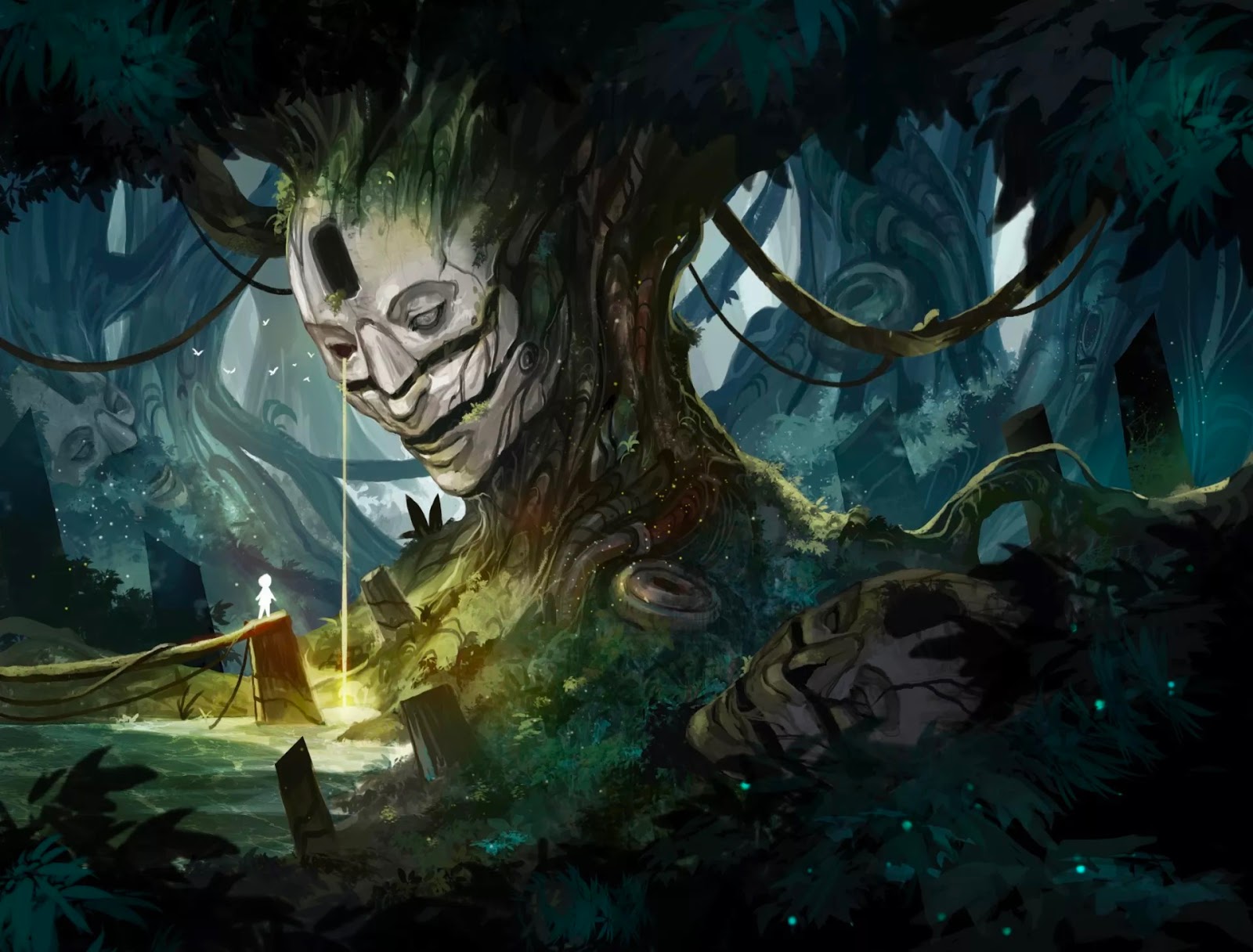
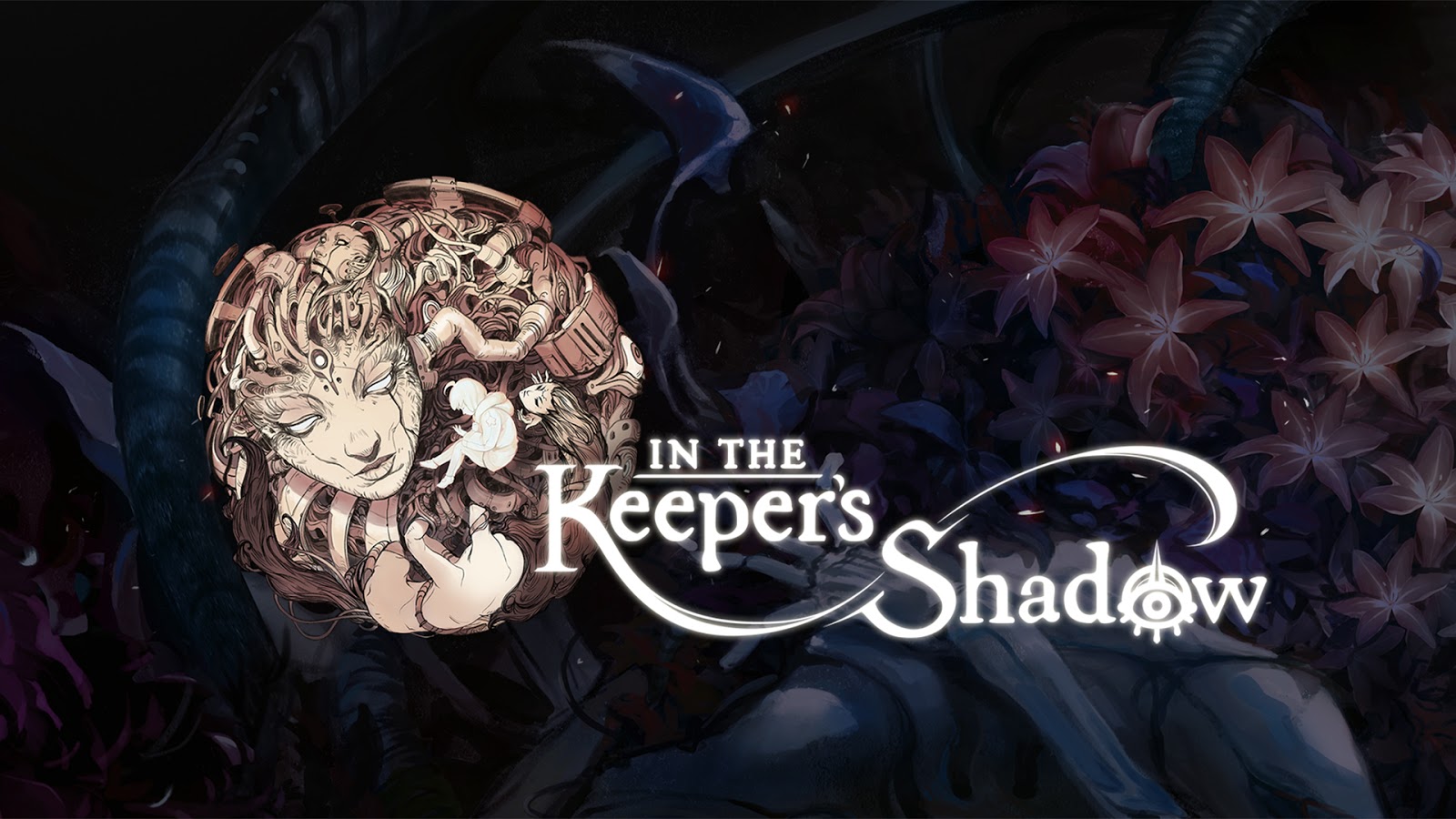
Fong: Yeah! My partner (Mark Biundo) and I are co-founders of Lonely Egg Studio and our first game is In the Keeper's Shadow, an intimate dystopian surreal hand-painted adventure game where Emi, a young, inquisitive girl journeys to unearth secrets amidst the crumbling, war-torn city sheís called home. We recently put out the press kit on the site, an art teaser video, and we're planning to start dev Twitch streams soon as things ramp up. In the Keeper's Shadow is a retelling the Keeper and the Girl work (like Game of Thrones from Song of Ice and Fire) that included artwork, story, and game notes I worked on mostly privately for the last 11+ years.


With In the Keeper's Shadow, this is the first time ALL personal and Keeper and the Girl materials have been scanned and made available. One of them being the original comprehensive 'game design document' which is around 30 pages of tiny handwritten notes from an independent course back in college. That was a painnnnn to make sense of for our writers, but worth it. Those were private/personal notes that had ....some painful memories that only a few people ever saw.

Kaminski: Has it been a scary ride?
I’ve never really worked in interactive games myself - cards, and RPGs haven't been too bad.

Biundo: Well, our experience is pretty atypical, as we're kind of on the fringes of the indie scene. We do get a lot of support and love, but from a pretty small portion of the actual industry.

Kaminski: The biggest battle is actually creating the product, which it looks like is well underway (or complete?). So you all have half the battle already done.

Fong: Marketing is a whole different beast that you'll get knocked out! I highly recommend twitter, InstaGram blasts, and also We love all those games! Edith Finch has been a great narrative reference for us.
I would like there to be a more widespread interest and appreciation for creators in games. blasts.
Games, Anime, Sci-Fi and Fantasy as well as Art cons would be a good bet to throw some flyers around as well. Especially once you start the kickstarter / funding drive.

The game is turning the the inner world that aided me through adversity into a cathartic release for friends and family to see our past build something positive. The older world and game notes/sketches were private, the ramblings and expressions of a younger me. It wasn't until this year that all of my Keeper and the Girl work were made available, scanned, and transcribed for our writers. The scariest part were the obstacles I would face revolving a project of this nature.
I love imagery with themes of legacy, the old talking to the new, what is consequently left behind, and how we personally internalize what it all means. The game touches on it.
Games are amazing in that regard. Seeing your work through still pictures and words, I've been limited to how connected I feel to the characters/my personas. I'm thrilled and a little scared to play and experience them in a way I haven't before.


Kaminski: See, the thing with Lonely Egg that I can see, even before you told me, that there's not only a passion, but also that it's about a much bigger issue.
Take a look at all of the what I would call timeless games in terms of themes and they all live to tell a message.
Shadow of the Colossus : Selflessness, Sacrifice, a moral for loneliness and depression.
Oddworld: Abe's Oddysee : The need for escape.
EarthBound is the need for stable relationships and the importance of them.
The fact that you're making games with a message is super appealing to me. Add to that the fact that I immediately bonded with the artwork.

Fong: Yes! I believe that telling people's real inner realities is a big step in advocacy
It connects you to the themes and the characters, thus connecting you to the creator.
I played the Beginner's Guide not that long ago. I really recommend it.
I guess Getting Over It also got a lot of recent recognition for it's existential commentary.

Kaminski: Yeah, and then even bigger themes would be in things like BioShock, Prey, Dishonored, Portal, What Remains of Edith Finch, etc.
Hell, even Night in the Woods was about growth.

But all of this ties back around to the issue at hand, that stories such as these are meant to potentially show bigger messages that (hopefully) stick with people and outlive their direct experience.
Basically that we still remember fondly after-the-fact.

Fong: We love all those games! Edith Finch has been a great narrative reference for us.
I would like there to be a more widespread interest and appreciation for creators in games

Kaminski: I actually think we're about to REALLY get into that because of the peak of graphics.
Narrative and story will take a complete forefront to the glitz.
And (hopefully) humans will start to become more concerned with actually getting an experience rather than a simple *BANG* *BANG*.
(Not to dissuade people that enjoy those games, because let’s face it, I enjoy a run-n-gun from time-to-time, myself)

Fong: Back in my studio art academics we were taught that an artwork doesn't stop at the edges of the canvas. The frame, the location it's in, the materials, the artist, the process are all part of the "artwork"
That's how you support the longevity for the work and the artist.

Kaminski: Now you're speaking my language (until you get into the WARHOLIAN HELL)
"WHAT'S IT MEAN?!" <BULLSHIT'S WAY THROUGH SOME HIDDEN AS HELL MEANING>

Fong: I guess that's different then what I mean. This is actually a great way to combat clones in the long term. By supporting an individual, you create less worth in clone work. And for meaning, an artist can gave as little or as much meaning they want to put in, it's interesting to know, but if I'm a functioning normal viewer, I'll take away my own meaning, too, without judging the creator's intentions.

It's kind of a humbling experience.

I get to see a fragment of someone's vision, but I know that I can't know everything about the artist's life to truly know everything about the work or what it took to get this piece here in front of me. It adds a bit of mystery that I get to fill in.

Kaminski: The fact that it's under the guise of pseudo-cutesy makes it all the better to me. Like for example how EarthBound and Little Nightmares were 'sort-of' cutesy, but dealing with some REALLY heavy stuff.


Fong: I love that play on opposites! It's life man, a push and pull between opposing things. For me childhood had its downs/dark times sure, but I was still a kid. Kids enjoy the little things and find the craziest stuff funny.

Kaminski: What would you recommend for a creative to start off with to get their name into the industry? Any specific things to study, themes, etc.? In that vein, do you have any recommendations for places to get a foot-in-the-door so to speak?
And for you specifically, Mark, what does creativity in the industry mean to you? Being a programmer and all, you are literally bringing life to pixels.

Biundo: There's no one size fits all route for breaking into the industry.  Generally, if you find what you love doing, do it a whole lot, and try to show people what you've done, you're on the right track.
I think there's more room for creativity as a programmer than non programmers realize, even in non game development roles.
Programming is basically defining a logic problem, breaking it down into smaller pieces, and then building those pieces one at a time to bring the full solution together.
Pretty frequently, as you're undergoing that process, you'll come across one of two things: you can't do it the way you originally intended, or you can actually do something more/better.
In the former case, the creativity comes into play in finding a way to either route around the problem, or assisting with design to find a solution that achieves the design goals while being technically feasible.
In the latter, you can end up providing your designers with new tools to play with that afford them opportunities they hadn't thought of.


Fong: For me it was being open minded and adaptive. The industry and life change constantly, so much you can not account for. I recently did a podcast episode with Iva from Art Side of Life and I brought up the GDC talk "Everything I Said Was Wrong: Why Indie Is Different Now," I recommend watching it because they comment on how there isn't one path and things done now may not work the next day. If you ask around, people have journeys all over the board as to how they got to where they are now.  Whether it's an interview, making a game, selling a product, having a portfolio, going to art school, etc, it all ends with you taking it in and making a choice. Nothing will happen if you do nothing.
I also ask myself and re-evaluate what things mean to me constantly.

  • What does it mean to have my name in the industry? 
  • Who is the industry? My family? My peers? The global market?
  • What is the foot-in-the-door? Going to school? Studying and practicing it? Making a game? Winning an award? Starting your own studio?
  • What to study? What would help me now? 
  • What do I find interesting and important? 

Haha, it's a lot of problem solving and questions for myself to work through. For me I feel like these things are hard to act on if I don't know how they're defined for myself. And it might take years of experimentation and mistakes to get a even a light grasp on it. These are not easy questions.

Kaminski: Do you have any questions for me?

Fong: Yeah! Do you have an idea of what success in the arts or industry entails for you?
And curious if there was an epiphany moment for you that shaped it?

Kaminski: Success: Firstly, of course, I think that it's important for everyone to have their own idea of what success means to them, individually. In one regard, I think that having financial stability from creativity is a big part of success, but success also means having the ability to share everything that I've learned with the folks that ask - and them actually take it to heart and to succeed on their own. So I guess in my own way, success is all about longevity. Having the ability to pass down knowledge and people actually appreciate it.
My epiphany moment started a bit before I started actively doing art. When I was back in high school, I continually admired art and people that create. I continually asked myself, "What kind of artist would I be if I could do art?"
Fast forward some time later, and quite a bit of dabbling and things - to a point where I was working what I would consider a dead-end job. I discovered conceptart.org and it's forums and realized that this is actually a thing that people do. It got my hand and mind moving way before I even knew what I was actually doing. I think that website was ultimately, my epiphany moment. I haven't really stopped drawing since then.

Fong: I agree with you, people finding their own sense of success. I remember conceptart.org, I didn't use it much though, it had wonderful sketchbooks in the forums!
It's nice to see that you asked those questions of yourself early in high school. Too often I find students who just do what they're told or can't think for themselves, they're just not really pushed to ask existential questions like that.

Kaminski: Thanks for asking - I don’t typically get asked questions for interviews, so this was more-or-less and experiment that I will continue moving forward.

The final two questions are typically the same: what goals do you have for the immediate? And long term?


Fong: Immediate goals: I would like to finish In the Keeper's Shadow and build foundations for the studio to enjoy it with family before the chance to meaningfully share dwindles away.

Biundo: My immediate goals are mainly to finish this project, developing experience as a team and hopefully a reputation along the way.

Fong: There is another game on the back burner till In the Keeper's Shadow is finished that is a letter to my father. In addition, we'd like to grow our participation in charities and organizations supporting children education and health.
Long term goals: Mark and I would like the studio to become financially stable enough to give back to charities and mentor/help other developers publish their personal projects while continuing to create our own IP.

Biundo: My long term goals would be that I'd like to explore more personal narrative games, hopefully sourcing from our different team members, as well as some less personal more "just for fun" type games, particularly RPGs.

Kaminski: The final question is pretty straight forward: What's the best piece of advice you've received OR what's some advice you could give fellow artists?


Fong: I can't speak for anyone reading what's the best course of action for whatever they may be going through, but I've found that learning to be more of a critical thinker and problem solver are skills worth building. Also, it's okay to make mistakes,  it comes with the territory of doing. But how you handle hardship and treat others in the process shapes and tells a lot about who you are.

Kaminski: Thanks you two, for taking the time to be a part of the interview series! I can't thank you enough!

----------------------------------

Thank you all for reading, I hope you enjoyed this interview with Jessica Fong and Mark Biundo.
If you did, please give it a SHARE via Facebook or Twitter, below.
You can view this interview, and many more, HERE.

You can find view more of Jessica's work at:
You can also learn more about Lonely Egg Studio and their games at:
Jessica was also recently recommended the book Creativity, Inc. that dives into some deep issues about the creative process.
If you would like to be a part of my interview series, simply fill out the contact form HERE and I'll get back with you as soon as possible!

----------------------------------

THANKS FOR READING, AND UNTIL NEXT TIME!

Follow Mat @artofmatk

Follow Ash @ashley.storyteller