Showing posts with label horror. Show all posts

Friday, June 1, 2018


As an artist, it seems like the landscape is ever-changing from simply the tools, to the aesthetic. I intend to be an artist that never wants to stop learning, and as such, I find more and more interesting artists every day. Each artist has a unique insight and point of view, no matter the experience level. New views help open my mind and teach me there are many ways to utilize my skills and I hope that sharing our stories will help others in the same way. I believe there are many paths on an artistic journey, and each interview will help to show the stories of the artists that tread them.


Today we'll be interviewing Miranda Meeks.


Kaminski: This question is typically the same to start to get a feel for you and your art in general, but: tell me a little about yourself. What led you to the path of the artist? Has it been something you've always been interested in or did the desire to leap into the artistic fray come later?

Meeks: I’ve always wanted to be an artist. I was constantly drawing when I was little. It’s just something I’ve always had a strong desire for. I decided to major in it at school and that’s when it became a concrete goal and what started me down this career path.

Kaminski: Interesting! Lately there seems to be a push away from the traditional path of art school and things, so it's pretty cool to see you venture through university.

I know that schooling definitely had an effect on my style and things and it makes me wonder if the same thing might've happened to you as well. I have to ask, what ultimately led to your decision to pursue dark fantasy, potentially even horror, in particular? Is that a genre that you've always enjoyed or did you find your love for it come along after a certain amount of time battling the canvas? Ultimately - what created Miranda's voice?
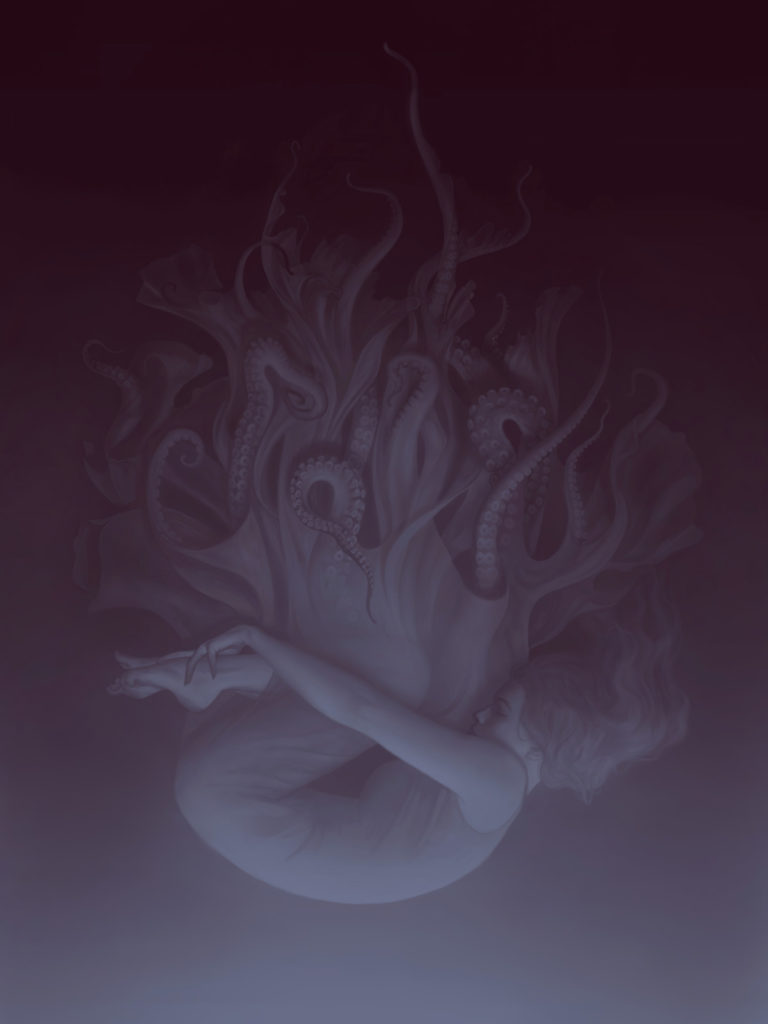

I’m inspired by Tim BurtonAlfred Hitchcock, movies and books that have that underlying vein of darkness or creepiness. At the same time, I do not want any viewer to feel deeply unsettled or disturbed when looking at my art, so it’s never a prominent theme. 
Meeks: Pursuing an undertone of darkness wasn't actually done on purpose, at least in the beginning. Looking back, I was always attracted to darker things. I loved snakes and monsters when I was younger. I’m inspired by Tim Burton, Alfred Hitchcock, movies and books that have that underlying vein of darkness or creepiness. At the same time, I do not want any viewer to feel deeply unsettled or disturbed when looking at my art, so it’s never a prominent theme. I love balancing it with aspects of beauty and ethereality. My goal is for a viewer to feel drawn to the image to discover the different layers of mystery, not to feel overwhelmed with negative feelings.

Kaminski: I also see that you have some formal education in the arts. Can you tell us a little about what your experience in art school was? Were there any huge pivotal moments that happened during your stint that still stick with you to this day?


Meeks: I went to Brigham Young University, with an emphasis in illustration. I learned so much during my time there. The typography class and the figure drawing class had a huge impact on my artistic perspective. I learned about the importance of presentation and good design. I also learned a lot during my editorial illustration and digital painting 2 courses; mostly about the process of thinking critically and metaphorically with your work. My time at BYU was an essential part of who I am today and I am very grateful for the opportunity I had to learn there. I don’t think that art school is essential for every artist, but I definitely think it was for me.

Kaminski: I can certainly relate to the art school necessity. I might've evolved as an artist without it, but I can definitely say that it would have been a much longer process. Art school, if nothing else, taught me temperance and discipline. Deadlines are constantly thrown at you from all directions while in art school, so if you can't meet a deadline after-the-fact, you definitely did school wrong!

When you first started pursuing art as more than a hobby, what kinds of tactics did you use to initially find work? Do you have any suggestions to throw at potential readers about how to maintain clients?


Meeks: When I first started pursuing freelance, I emailed art directors a few times and sent out one postcard. Emails worked while the postcard didn't. I feel that postcards CAN work if you are consistent with them, without being pushy. Honestly, I wholeheartedly believe that the best tactic to get work is to keep making new work and putting it out there for the world to see. Doing this persistently not only improves your craft, but is a form of advertising in and of itself. Pretty soon, the art directors are coming to you, and you're getting dream clients and dream jobs. It's definitely not a short-term solution, but it's worked wonderfully for the long haul.

Kaminski: It's so interesting that we tried some of the same tactics, especially initially. Related to getting into the the field: What's some advice you can give to working in the book cover industry? What is it like working with larger clients such as TOR and Subterranean Press, among many others?

Meeks: My advice for getting into book covers is based on two things: one, actually go to a bookstore and look at all the covers. Take pictures of the ones you really like. This is a great way to make sure your art is relevant for covers, as well as gaining inspiration into ways you can improve your craft. Another thing is when you make personal pieces, practice creating them as if they were book covers, i.e. format them to the standard 6:9 ratio, leave some space for type at the top or bottom, etc. This will train your brain to think about how to solve these unique design problems that come with covers.

My advice for getting into book covers is based on two things: one, actually go to a bookstore and look at all the covers. 

As for working with larger clients, it's an absolute dream. The art directors are wonderful at communicating, and I try and make their job easy by presenting my ideas and the reasoning behind them, ultimately with the understanding that they're the client and it's my job to make them look good. The larger publishers really are some of my favorites clients.

Kaminski: WOW! You're in both Spectrum (multiple times) and you've been nominated for a Chesley! How very prolific! Do you have any advice on getting into either of those publications? Was it easy-peasy-lemon-squeezy ... or difficult-difficult-lemon-difficult?

 
(WIP - left, FINAL - right)

Meeks: Haha, I definitely would say it's difficult-difficult-lemon-difficult! I feel incredibly fortunate for both my Spectrum entries and the Chesley nominations. It feels like largely, each situation was out of my hands. Luckily, my work tends to fit the Spectrum "look" pretty ideally, I think that's been a major factor. I haven't ever catered my portfolio to design it to fit, it just so happens that it does, if that makes sense. So my biggest actionable advice would be that if you feel like your work can fit within that aesthetic, then try submitting a few pieces each year. Look through the pages and see what kind of images have been accepted. Try to be objective about your work, but give it a shot and submit, since you'll never know unless you submit them in the first place.

Kaminski: Yeah! I know what you mean, catering your portfolio is always a daunting task. And then there's the fear of, 'what if I submitted the wrong pieces', or even 'what if I submitted too many, and one of them is the disqualifying factor'. It can be a very stressful experience to submit to anything, annual and jobs, alike. Speaking of submissions, do you do conventions or gallery shows? And if so - with either - what kinds of experiences have you had? Do you have any horror or absolute joy stories related to either?


Meeks: I have done one convention and multiple group gallery shows. Being last year was my first convention, I had a lot of upfront expenses, including stocking prints, banners, tablecloths, etc. Fortunately, I don't have any horror stories for my experience at the convention, though someone did accidentally leave their wallet at my table and I was stressed the whole time until he came back for it, haha. It was three days of exhaustion but also of absolute joy, of being able to connect with other people who appreciated the stories I tell through my work. For galleries, the main expense is physical paint, canvas, and framing and shipping the piece to the gallery. I will never forget the first time one of my paintings sold, that felt amazing.

Kaminski: I can 100% relate to conventions being an absolute joy. Most people gauge their joy on merely how much money is made from the convention. SURE you have to keep track of expenses, but everyone should always remember that they're like working vacations. You get to get out of the studio and actually experience people, places, things. It's exhausting, but at the same time, an absolute joy, to me at least.

With your first convention under your belt, I bet you're itching to do more. Speaking of the future, what goals do you have set for yourself in the immediate? And long term?

Meeks: My goals for the short-term include refining my portfolio and possibly trying out more conventions as a way to supplement my income. Long term, I would love to make an art book at some point, though I am only fleshing out the details currently, I'm really excited about it and can't wait to make my ideas come to fruition.

Kaminski: OMG! You have to make an art book! I adore art books of all kinds. It's probably a bit of a terrible addiction I have, buying and pouring over art books.

And finally, What's the best piece of advice you can give to fellow artists OR what's the best piece you've received thus far?

[...] it's OK to not have everything in your portfolio. 

Meeks: My best piece of advice I've received was that it's OK to not have everything in your portfolio. It took an enormous weight off my shoulders, realizing that I don't HAVE to have a creature design, or an environment, or robots or whatever, in my portfolio. It's important to practice and continue to hone your skills, but if you dread the idea of drawing crowds, there's nothing that says you HAVE to put a crowd scene on your website. That way, you only get to work on images you love. I know some artists are happy drawing whatever, but for me, my happiness is very contingent upon subject matter and whether or not I find that subject matter appealing, so this advice has always really resonated with me.

Kaminski: THANKS for being a part of the interview series, Miranda! I have to say, I think your work is incredible, and I can’t wait to see what you come up with next!

----------------------------------

Thank you all for reading, I hope you enjoyed this interview with Miranda Meeks.
If you did, please give it a SHARE via Facebook or Twitter, below.
You can view this interview, and many more, HERE.

You can find view more of Miranda's work at her WEBSITE:
If you would like to be a part of my interview series, simply fill out the contact form HERE and I'll get back with you as soon as possible!

----------------------------------

THANKS FOR READING, AND UNTIL NEXT TIME!

Tuesday, May 1, 2018

As an artist, it seems like the landscape is ever-changing from simply the tools, to the aesthetic. I intend to be an artist that never wants to stop learning, and as such, I find more and more interesting artists every day. Each artist has a unique insight and point of view, no matter the experience level. New views help open my mind and teach me there are many ways to utilize my skills and I hope that sharing our stories will help others in the same way. I believe there are many paths on an artistic journey, and each interview will help to show the stories of the artists that tread them.


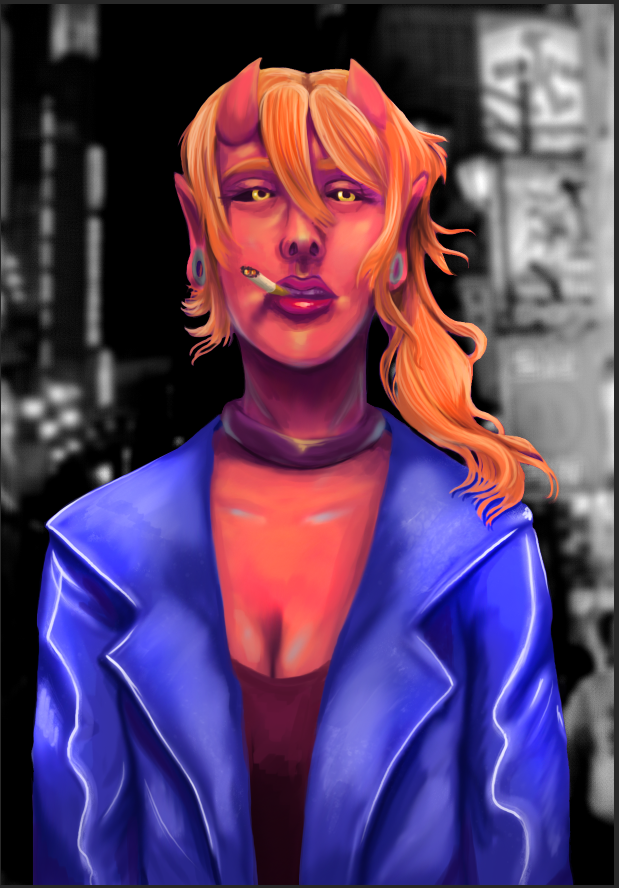
Today we'll be interviewing Amanda "TheMandii" Solano.

Kaminski: This question is pretty typical for all the creatives I come across, but what drew you into art in the first place? Was there a pivotal moment where you were like, "Holy crap, art has GOT to happen!"?


TheMandii: This question always hearkens back to my earliest memories of art. In order to keep me from making scrawling, colorful scribble masterpieces on the wall, my mother made it a point from very early on to always keep me stocked with lots of paper and coloring books to curb my urge to throw color onto everything. When you're a small child, teachers always ask what you want to be when you grow up. My answer was always "An artist. Or a rock star. Or both."

That being said, it's such a natural part of myself that I feel like I would be doing my very nature a disservice by not making this a part of my life, even in a part-time capacity. Growing up, my family wanted "more" for me, being a doctor or anything that paid well, really. I studied hard in school and did well enough, always trying to find a way that I could make money with my art so that my parents would still approve of what I was doing even if it wasn't saving lives or making new technologies and making six figures.

I think a pivotal moment for me was when I started getting scouted by colleges in high school for my portfolio and college was on the horizon and other people finally started telling me that I should do something with my art even at that level... My parents had finally accepted that for me to do anything else with my life wouldn't be right for me, so I moved forward with it from there.

Kaminski: I can somewhat relate for the need to find something extremely profitable, although my family seemed to be more akin to, "You like art, you should be a tattoo artist!" So, I guess we both share in the aspiration to at least look like a rock star, right?

Speaking of rock, what themes do you find yourself pulled to? Do you have a desire for the macabre? Sci-fi? Regardless of your personal attraction to a specific genre, why? What kinds of things ultimately keep you drawing in that genre?


TheMandii: I have very eclectic tastes, so I have a hard time sticking to just one thing. As a result, I tend to mix and match whatever suits my fancy on a given day. I'm comfortable with most genres as a result of the amount of dabbling that I do.

Right now, however, my major focus is more of an occult alt-punk BDSM vibe, I do a lot of occult imagery with religious or mythological symbolism mixed in for fun.

With that being said, I also have a deep love of fantasy art. Elves, dragons, angelic warriors, brave princes fighting an omnipotent evil - the list goes on, I love it all. The things that draw me to these genre choices usually fall in line with my love of fantasy literature as well as my musical tastes. As far as my current focus goes, it's really just another mashup of the symbols I love - skulls, death, demons, old gods of mythology, and darker themes but not quite on the level of classic horror (which I also love). My endless fascination with this myriad of topics keeps me coming back time and again.


Kaminski: Interestingly enough, it appears to me like your work would suit well on some of the more metal-esque synthwave albums that I've been seeing coming out lately. Artists like Ariel ZB would make a great contact for you to look into what the industry is looking for - if you're into that kind of thing, that is.

What kinds of experiences have you had thus far? What kind of really good experience? What kind of really bad experience? And as far as the bad one goes, what did you do to remedy the situation or what do you think you could have done to make it a positive situation?

TheMandii: So far, I've mainly done assistant or part-time freelance jobs. My first real studio experience was working as an assistant inker doing backgrounds and 'blacks' (large areas filled with black ink in comics) for an artist who's been in the biz for 40+ years. I was working at the time on DC's Flashpoint and the Archie reboot of Megaman. It was a pivotal point in my life as an artist, I learned so much about the business - the pitfalls, the joys, the techniques, so many things that I had never even considered before. The knowledge gained from my time there alone was worth every second - I remember that job very fondly.

On the flip-side (and without being too specific), in my earlier days of taking freelance work, I learned that if you don't set expectations up front, some people may try to take advantage of your time and your skills. In my case, to remedy having that happen to me, in the cases where that happened I just powered through the work and moved on, and in one case I actually bit the bullet and refunded someone in that situation. These were due to my lack of experience, and in the end was mainly my own fault for not having that knowledge.

It's a valuable lesson I learned the hard way: set those expectations, and keep yourself on the level with your client via contracts - this way everyone knows what they're getting into. It's something you can apply to all things, not just art.

Kaminski: I can definitely relate on the destruction of a project that was completely up-front because I didn't nip-it up front. That's honestly what ended up, ultimately, creating my process breakdown. I wanted to be completely transparent as to what the process is and what we'll be dealing with during the course of a project.

Knowing that you had some experience in the comics industry, is this something that you're interested in? Or do you have a specific field that you're striving for? Any specific reasons why?

TheMandii: If I were to do comics, they would be ones that I've written and drawn - other than that, I don't think I could see myself doing comics full-time as a goal. I do admire the industry greatly, but my real love lies in illustration and creating concepts for my IP. I really gravitate towards character art more than anything else, creating otherworldly people has always been my favorite thing. It allows for the idea that an alternate reality in which fantastic things like magic (for example) might be possible, even if only in fantasy. That's what draws me to that kind of art.


Kaminski: Switching gears: I know that you work a day job typically - can you share some insights into working both as an artist and as a day-to-day worker? What kinds of techniques do you have to cope with switching gears mentally? Are the two interdependent or is your day job something completely different?

TheMandii: My day job is completely different and has nothing to do with art - I work in tech during the day. With that being said, I'm very fortunate in that my current employer puts large emphasis on work-life balance. I use all of my breaks (and a huge chunk of my free time overall, outside of work) for art.

I can say though that in past experiences, my work-life balance was not, well, balanced.... My art really suffered for that despite my efforts. I definitely sympathize with people who have a hard time coming home from a rough day at a day job and no longer feel like drawing.


Honestly, the only insight I have into that is that you have to power through it if you want to get better in your craft. It's kind of a tough-love approach, but it's the truth.

Kaminski: Most people tend to forget that life feeds art and vice-versa. So if you're not having a good day, the tortured artist mentality doesn't typically work out. There was a comic by Sarah's Scribbles that talked about this exactly

With the mention of work-to-life balance, what's a Mandii working on these days? Do you have any specific projects you'd like to promote?

TheMandii: Mainly, my real "project" is continual self-improvement. I've been working on a lot of techniques, drills, using reference, and doing exercises and keeping on a strict schedule in order to improve my skills.

Outside of that, I have a wide variety of IP's that I have in the works-many of them I try to keep under wraps as much as possible for now. One that I will be happy to talk about is my current main labor of love. 


I have a particular character that frequents the majority of my work in the last couple years. Her name is Riley, and I am slowly releasing bits and pieces of her world. The best way I can describe it right now is 'Supernatural Cyberpunk Urban Fantasy'.

I have yet to name this project, but expect to be seeing a LOT more of it, and soon!

Kaminski: Now you're speaking my language - cyberpunk! It would appear you've been following suit by sticking to the theme, what with you sticking to a rigorous streaming schedule. What tips do you have for starting to schedule working times and play times? Do you have any recommendations for artists out there that would like to get on a schedule? Maybe you could talk a bit about the pitfalls or upsides to scheduling pretty tightly.

TheMandii: Yes, Rigorous is a good word for that! I treat my streaming times as practice time for my art most of the time, so scheduling it helps prevent me from doing things that are otherwise unproductive. The beauty of it, though, is I am not yet at the stage where I set an end time for my streams, I only stream for as long as I feel like (usually an hour or more).

Advice for other artists who want to get onto a schedule, really, is just look at your day-to-day routine and be realistic about what you spend your time on. All that time you spend on social media, vegging out in front of the TV, or just doing nothing? That could be streaming time. Of course, you want to keep time for yourself for self-care and relaxation! But, if you can spend time scrolling your social media feeds, you can spend time streaming or practicing instead.

Of course, you want to keep time for yourself for self-care and relaxation! But, if you can spend time scrolling your social media feeds, you can spend time streaming or practicing instead.

Tight schedules tend to stress people out - but it's really just a matter of discipline. Pitfalls to avoid would be to forget to schedule free time for yourself. Remember, no one is FORCING you to stick to a schedule, but your fans will come to expect consistency from you. Upsides are, you always know what you're up to!

Kaminski: Honestly, I think lots of creatives feel that obligation to be on at all times. We all tend to feel bad if we take breaks because it's not what we see from the output of major art collective websites. We get this impression that art is just constantly being pumped out, and while that may be true of some artists, we also don't talk enough about the burnout that can happen by not taking breaks. I feel it's an important thing to discuss, so I'm glad that you bring that up. 

Back on track with creating more work, what goals do you have set for yourself for the immediate? And the long term?

TheMandii: My immediate and long-term goals have been and always will be to keep improving. Aside from that, my current long-term goal is to really flesh out and build up the world of my latest IP, and perhaps to revamp some of my older ones. Whether those come in the form of art, or in writing form, you'll have to stay tuned to find out!

KaminskiWhat's the best piece of advice you've received OR what's some advice you could give fellow artists?


TheMandii: The best advice I can give to other artists is that if you want to improve your skills in your chosen craft, you need to put in the time, blood, sweat, and tears into it. Push your boundaries, try new things, study! Even if those studies never see the light of day, the thing that matters is that you're practicing, always.

Kaminski: It's always a pleasure to interview someone whose artistic taste is in line with my own! Thanks for all your advice, and for volunteering to be interviewed!

----------------------------------

Thank you all for reading, I hope you enjoyed this interview with Amanda "TheMandii" Solano.
If you did, please give it a SHARE via Facebook or Twitter, below.
You can view this interview, and many more, HERE.

You can find view more of Amanda's work at her INSTAGRAM:
If you would like to be a part of my interview series, simply fill out the contact form HERE and I'll get back with you as soon as possible!

----------------------------------

THANKS FOR READING, AND UNTIL NEXT TIME!

Thursday, April 5, 2018


As an artist, it seems like the landscape is ever-changing from simply the tools, to the aesthetic. I intend to be an artist that never wants to stop learning, and as such, I find more and more interesting artists every day. Each artist has a unique insight and point of view, no matter the experience level. New views help open my mind and teach me there are many ways to utilize my skills and I hope that sharing our stories will help others in the same way. I believe there are many paths on an artistic journey, and each interview will help to show the stories of the artists that tread them. 


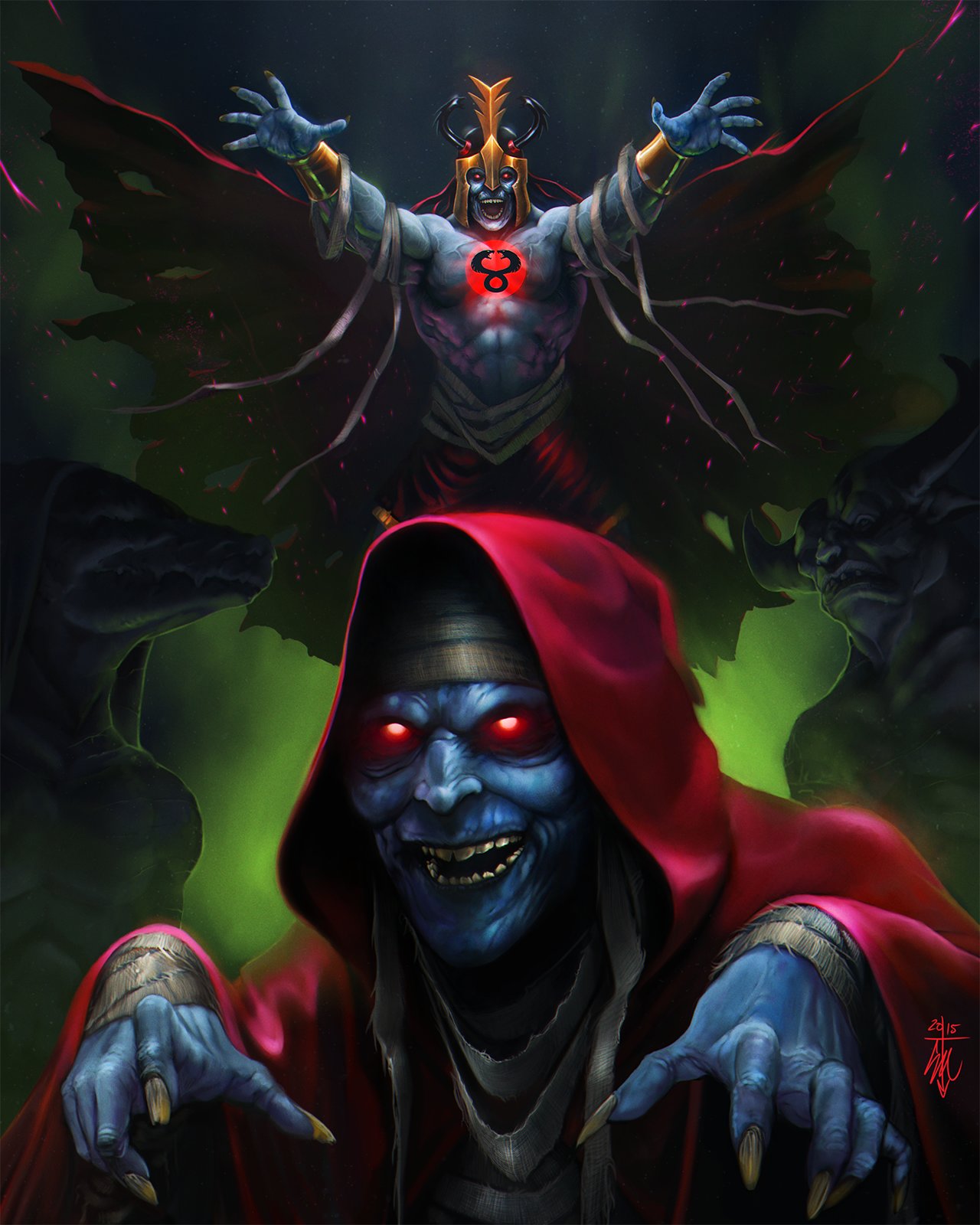
Today we'll be interviewing Sal "TheDarkcloak" Vador.


Kaminski: My first question is pretty much always the same: Firstly, tell me a little about yourself. What got you into art? What makes you continue perusing it? Is it something that you always saw yourself falling into?

TheDarkcloak: Well, most call me Sal or simply 'Cloak’. I'm a full time freelance artist going on three years now working across, as I like to say, "page, stage, speaker, screen, skin, sculpts and now polygons!", meaning I work in a variety of mediums, analog and digital, as well as visual and aural.

I'm not sure what first got me into art at a young age. I know I've been drawing and doodling since I was about three years old. From then on, via magazines like Mad and Cracked I discovered caricature, but what really drew me to those magazines was how well drawn everything was. I remember being about somewhere around seven or eight, and I'd run to the corner store to pick up the latest issues. After that I started getting into comics more seriously too.


I'd say initially comic books and animation are what drew me in the most, though later on, when I started getting into artists like Boris Vallejo & Julie Bell, Frazetta etc, that my view of art and illustration started broadening and I found it all very exciting and imaginative. When I started playing Mutant Chronicles later on when I was about thirteen or fourteen, that's when I discovered Paul Bonner's work and it all seemed very much like what I saw in my head. I would say that's what got me to get seriously into painting and pushing my work the hardest; more so than comics or cartoons did previously. I mean the Frazetta / Vallejo stuff was great, but I never really made the connection for myself as that being something I would do. Something about Bonner's work really clicked and I became obsessed with the challenge.

From what I remember and from what the family says, it seems I've always been enraptured with storytelling. I think that's what has kept me pursuing creative work in general all these years. Whether it's through the art I make, or music, or even the character voice stuff I do.

In general, though, I would say I have always been drawn (no pun intended, maybe) to making art and creative work as a whole "what I would want to do with my life" from a very young age. Which likely solidified in my person around third grade or so.

Kaminski: Sounds like Mutant Chronicles had the same effect on you that ShadowRun did on me.

TheDarkcloak: Oh yeah, man, Shadowrun is in there as well. The whole... cyber-techno-barbarism has always been an appeal to me. Same with monsters, demons, swords and sorcery.

One of my favorite cartoons growing up was Thundercats and I think they nailed that whole mix of mutants, technology, fantasy, sci-fi, etc. The implications that it's actually a post-post-apocalyptic earth? That's my jam. Both the intro and the end credits sequences from Thundercats have always had a BIG impression on me and my art psyche, in ways that I've only recently started to realize. I mean... when you look at my work you can start seeing it. It's now becoming deliberate and whole for me. Before that, I didn't even know I was doing it.

Kaminski: Finding your voice is probably the most self-satisfying thing we can do for artists (for a time at least). I'd only just recently discovered my own with Ashley kind of guiding me along the path. She has insights that I don't even know how to tap into yet.

TheDarkcloak: Yeah, there's a lot of frustration out there for that, it seems.

Most artist interviews I hear or other artists I've talked to, it seems to always come about naturally or accidentally. Like a realization of getting to know yourself for the first time. I think it's great and an integral part of self-development.

I feel like finding your voice is much like finding a relationship - it usually comes out when you're not looking.

Kaminski: Speaking of finding voice, was it hard to narrow focus after you'd discovered all your different outlets to art or do you prefer to be very multi-faceted? Does this help or hurt your creativity?

TheDarkcloak: Not really. Animation, comics, story-boarding, voice acting, making music, sculpting, make up, special effects, storytelling - and then of course the visual artwork stuff - to me this is all part of the same wheel. To the outside world it may look like I am multi-faceted and have a 'jack of all trades' thing going on. It's not. It's all the same house.

I have a bone to pick with this mentality of 'jack-of-all-trades-equals-master-of-none' mentality. My gut feeling is that it is a way of limiting the self. A way of imposing barriers to expression, or to strive for less. We highly revere musicians that are multi-instrumentalists, and painters as well to boot! I don't see why the other way around can't be true as well? We hold the renaissance masters in high regard, and yet so many of those guys and gals had more going on than "just being painters", you know?

Leonardo Da Vinci - need I say more?

I don't think it hurts my creativity. Perhaps at first it may have a bit? But I've come to realize over the years this was mainly due to poor time management and prioritization.

Animation, comics, story-boarding, voice acting, making music, sculpting, make up, special effects, storytelling - and then of course the visual artwork stuff - to me this is all part of the same wheel. 

In my teens, especially after discovering what goes into movie productions for example, and learning more about James Cameron, Stan Winston, and all the amazing folks who worked with them, it really became clear to me that all these disciplines not only work together, but can be harnessed as part of one whole wheel. We can call it creativity, or storytelling, or design. One of my favorite books of all time, when it comes to what really cemented this approach and way of thinking for me was the 'Making of Terminator 2' book. It is CHOCK full of everything that went into the film. From miniature work, digital effects, set design, costume design, concept art, storyboards, cinematography, practical and make up FX, pyrotechnics, props, you name it. Seeing all those components working together to tell a story and to create some memorable sequences as they did with T2, really brought it all home for me.


Another aspect of all this, something that is pretty personal to me, but inevitably comes up every time I examine all this. My sister. I'm the oldest of three, older brother to two younger sisters, and the middle sister unfortunately got Meningitis when she was about six months old... and it wasn't caught in time. It fried her. She's essentially been a toddler all her life, which meant I had to grow up very quickly at a young age, helping with the responsibilities of having a sibling with mental disabilities such as hers.

Funny story, when I was a little kid, I have a very vivid memory of watching her for a few minutes and then turning to my mom and going "You know... what if she's just faking it? She gets everything she wants. We're all always fussing over her. She doesn't have to do homework or go to a normal school... What if?" This made my mom crack up a lot, while tinged with heartbreak at the same time. We still laugh about it to this day.

Case in point: from a very young age, I learned to be grateful for having a body that works. A mind that works. Being ABLE. Being appreciative and cognizant that not everyone can DO many of the things that so many of us take for granted. In a way, me pushing myself to be the best me that I can be, not just in the things that I DO, like the art stuff, etc., but also in who I am as a person, is a way to honor and I guess make up for what she's never going to be able to do. From a place of gratitude and appreciation that I can. A big part of me hopes, that I can make everything I push be a success, so I can contribute to the family in a meaningful way to look after her in future. My parents are getting older... and it'll likely come down to my youngest sister and whatever I can do as well. Hard not to think about that.

Kaminski: That's beautiful, Sal! It shows with all of your work and communal push, that you are striving for something greater at all times. It seems like your back story and growing up really had a long-lasting effect on your person as a whole, which is a direct reflection on your creativity.

Besides your personal life, what creative endeavors would you sparked your 'AH-HA' moment? What made you want to dive into this career path full-speed?


TheDarkcloak: I kind of touched on this a bit earlier, when Paul Bonner's work on Mutant Chronicles / Doom Troopers / War Zone clicked for me, coupled with the realization of what all goes into producing a film such as Terminator 2. Further than that, though, I think it really comes down to telling stories and exploring unconventional ideas.

For example, one of the first books I ever did was in the second grade, and it was a story about a slime monster that was brought to earth in some 'space rocks'. Through the course of the story, gruesome as it was, even at second grade, you basically find out that the monster really is not in the environment it needs to be. It was completely unstoppable. The army fights it, the world unites against it, and it only seems to make it stronger and bigger. No surprise that giant monster movies always have had a strong place in my heart. Anyway, finally a scientist figures out that our atmosphere and gravity are part of what was contributing to it's mutations, and the course of action from there was to capture it and launch it to the moon. That sorted everything out!

I think my disappointment with humanity set in at a very young age and I sympathized with monsters - something which makes me very keen on one day working with Guillermo Del Toro. A lot of what he talks about regarding monsters, love, humanity, innocence etc speaks right to how I view those things as well.

No surprise that giant monster movies always have had a strong place in my heart. 

Kaminski: Your love for Del Toro makes a ton of sense though. He has that aesthetic as well for your kind of work.

TheDarkcloak: Yeah, when I went to his museum exhibit it was like visiting an old friend.

Kaminski: As a side question, have you been going to cons for a long while? What are some of the ones you've done?

TheDarkcloak: Mostly local ones here. Been doing conventions for eleven years now as a vendor. Too many to count as an attendant.

Crypticon, Days of the Dead, Mars Con, CONvergence, GlitchCon, Minneapolis Comic Con, FallCon, to name a few

Kaminski: How's con life treating you? Have you ever found any ups-or-downs with doing cons for you in particular?


TheDarkcloak: Con life has been pretty good. I think I started out pretty strong, thanks to listening to hours and hours of artist podcasts and working in event planning.

The biggest up is seeing all the familiar faces and friends that end up becoming your convention family so to speak, in a way it can be a bit of a mini-vacation! Aside from that, it's obviously a great way to meet with your audience and get a grasp on what they like or don't like about your work.

The downside that stands out the most is not ever having enough time. No matter how long you prepare for, there's always something that needs doing and it seems to always be crunchtime for long hours leading up to the convention itself. Whether it's needing to restock on prints, or working on your display, even simple things like making sure you have food and drink and other necessities in your survival kit to get through the weekend.

All in all, I enjoy it though. I don't think I could be one of those folks who do nothing but conventions full time, doing sixty plus shows a year though! We talked about that briefly on one of the streams.

Kaminski: Con-vacation. That's what I consider every one of them.
I'm not there to look like an ass with my assy face on the whole time if I don't make money.
If I make table plus food, WIN!
If not, well... it did get me among "the people".

TheDarkcloak: Yes! All of the above. The assy face? Seriously, that seems to be such an epidemic.
Treat everybody who walks by as if they're your first customer of the day, even if they don't buy anything. You never know what kind of great conversation you may strike up, friendship you may spark, or what you may learn. Same goes for other vendors around you. Be friendly, be respectful, be approachable, be the kind of neighbor you want to have.

I can't tell you how many times I've sat across from other vendors who sit there buried behind stacks of merchandise, glued to their phones or books, who end up glaring over at our table when we're bantering with people and making sales, as if it's your fault they aren't selling or being approached.

Kaminski: I've also found that being a panelist and doing art shows helps to pull people to your table.

Since your very active in the art community, how do you manage to keep track of everything? Do you have scheduling software or something or do you just have specific days / times for things?
Basically... what is a day-to-day like for a Sal?

TheDarkcloak: That's a really good question! Through a combination of the sticky notes on my desktop and private note channels on my Discord to keep reminders open, cloud synced calendar apps across my desktop tablet, and phone, and some other apps to help keep things organized and scheduled, even my social media posting. Otherwise, my day to day is generally structured and balanced for work, working out and studying; promotions, answering emails and other communication, and organizing the aforementioned notes and apps. Once you have a routine down for that stuff it becomes second nature.


Usually I have Monday for studies and workshop time, not just limited to art but self-care stuff too. Wednesday is my streaming and hangouts night. Sunday morning is worship day at the Dungeons and Dragons altar.

Kaminski: Yeah, a majority of the time my desks (at home and work) are filled with notes and doodles on sticky notes to help keep things at least pseudo-organized.

Switching gears: When you get bored of your work, whats a way that you find yourself getting back on track? What coping mechanisms can you dole out to help deal with a lull in creativity?

TheDarkcloak: This is a tough one. I rarely get bored with my work, unless it's in the stage where you're basically just rendering and rendering, sometimes that can get a bit dragging. In those cases I'll switch over to something else I've got on the burner to refresh my approach. Since I get into quite a few different things, sometimes that will help break the monotony up too. For example I might tackle a sculpt, or some music. I sometimes find that I can come back to the piece with some new observations and thoughts as well. Same goes for any of the other creative work.

As far as creative lulls? Well, what I find usually helps is doing some art ABOUT the creative lull or block. Maybe representing it through a creature, or personification of it. Or get completely silly and do something really random, either based on something or some combination you find funny, or a random suggestion by someone else.

For example, I once ended up drawing Wolverine juggling chickens because I joked about it when someone asked me to draw something. Same with a pole-dancing Hulk.

Otherwise, there's also the squiggle challenge things I've been doing on my streams. I ask people to submit random squiggles or scribbles which I then turn into stuff. I also keep a sketchbook full of squiggles that I have my friends do with a wide light blue Copic marker, which I then turn into things with black ink. It's kind of become a bit of a ritual when I go out with friends or to play Dungeons and Dragons, where I have folks make those squiggles in my sketchbook and then I problem solve and noodle the shapes and blobs into things.

Kaminski: Sweet! So many creative solutions to common-place problems!
Speaking of many different projects that you're juggling: do you have any specific one that you'd like to talk about or promote?

TheDarkcloak: Well, there's a few that I'm working on right now, some personal, and some in collaboration with others or as part of a studio effort. More updates on those as they develop!


The most public one I'd like to talk about is a video game by Lonely Egg Studios, founded by Jessica Fong and Mark Biundo, called 'In the Keeper's Shadow'. We recently dropped the trailer for it and they'll be talking it up at this years' GDC and other events.

The other major ongoing thing that's been going on, as you well know, is The Anvil - Art Forge. Which is a group co-founded, co-admined and run by me and a few others focused not only on development of craft and technique via critique and resources, but also of mind and self, geared very much from everyone to the beginning artist to the established professional or long time veteran.

It's a small but very focused group and it's been around for just over a year and a half, only more recently going public as a 'closed' group.

Kaminski: Yeah, that's actually how we were initially introduced, via Jen Waldon (she was part of the interview series, #6).

The last two questions are typical final questions for the interviews:
What goals do you have set for yourself for the immediate? And the long term?


TheDarkcloak: Immediate goals: Finish ripping through this stack of deadlines! Otherwise, finishing up rebuilding the downstairs to set up shop there, both for art and for making music - really any creative production in general. I'm also developing my 'Conversations w Cloak' real talk videos addressing various artist issues and questions as well as a mentoring package (focused on working with creatives in general beyond just the 'how to' aspects of art), which I'll be talking about more in the coming weeks. Working with the team on where the Anvil is going next, including a dedicated Twitch channel with various people contributing streams to it. The plan is to have folks doing live critiques, demos, walkthroughs and more for the group, with the stream also being bounced to the group directly.


As for long term: The personal projects I mentioned like the card game, video game and IPs I have been developing some of which take place within a shared universe. I would love to continue working on big projects (in film, games, collaborations, etc). Really, I'm open to where all this has been heading. It's been one of the best adventures I've ever been on, and I am really looking forward to where my work, travels, and friendships go next!

Kaminski: Final question: what's the best piece of advice you've received OR what's some advice you could give fellow artists?

TheDarkcloak: There's just so many great moments and conversations and pieces of advice that I've gotten from people across the various arenas I've had the honor of stepping into, and even through the stories I've read, watched, or heard over the years. Artistically speaking, I think it usually all throws back to the spirit of what the great Frazetta said: Don't be a second rate Frank Frazetta, be a first rate You.

A lot of the advice I give and have gotten that I have found to be the most helpful really boils down to simply that.

We put a lot of pressure on meeting or exceeding assumed or imagined expectations, or expectations we created for ourselves that become overbearing to the point that we forget what gets us started on this road to begin with... We forget that we did that in the first place, created the rules of the game so to speak. The irony of it all is that getting out of your head and out of your own way seems to be the most authentic path to being a First Rate You. By my observation it seems like most artists hit their stride the strongest when they hit on this idea or path, and my impression is that it paves the way to the most satisfaction overall.

Other than that? Little things and phrases like:

Play. Work. Balance.
Plan your work, work your plan.
Say what you mean, mean what you say.
Own your sh*t.

Kaminski: Hell yeah! Espeically that last piece of advice.
Well, Sal, it's been an absolute pleasure! You are definitely an incredibly busy guy, and this interview, the longest to date, should attest to that.

----------------------------------

Thank you all for reading, I hope you enjoyed this interview with Sal "TheDarkCloak" Vador.
If you did, please give it a SHARE via Facebook or Twitter, below.
You can view this interview, and many more, HERE.

You can find view more of Sal's work at his WEBSITE:
https://www.thedarkcloak.com/
You can learn more about the Art Anvil Artgroup here:
https://www.facebook.com/groups/theanvilblacksmiths/

If you would like to be a part of my interview series, simply fill out the contact form HERE and I'll get back with you as soon as possible!

----------------------------------

THANKS FOR READING, AND UNTIL NEXT TIME!

Thursday, August 17, 2017


As an artist, it seems like the landscape is ever-changing from simply the tools, to the aesthetic. I intend to be an artist that never wants to stop learning, and as such, I find more and more interesting artists everyday. Each artist has a unique insight and point of view, no matter the experience level. New views help open my mind and teach me there are many ways to utilize my skills and I hope that sharing our stories will help others in the same way. I believe there are many paths on an artistic journey, and each interview will help to show the stories of the artists that tread them.

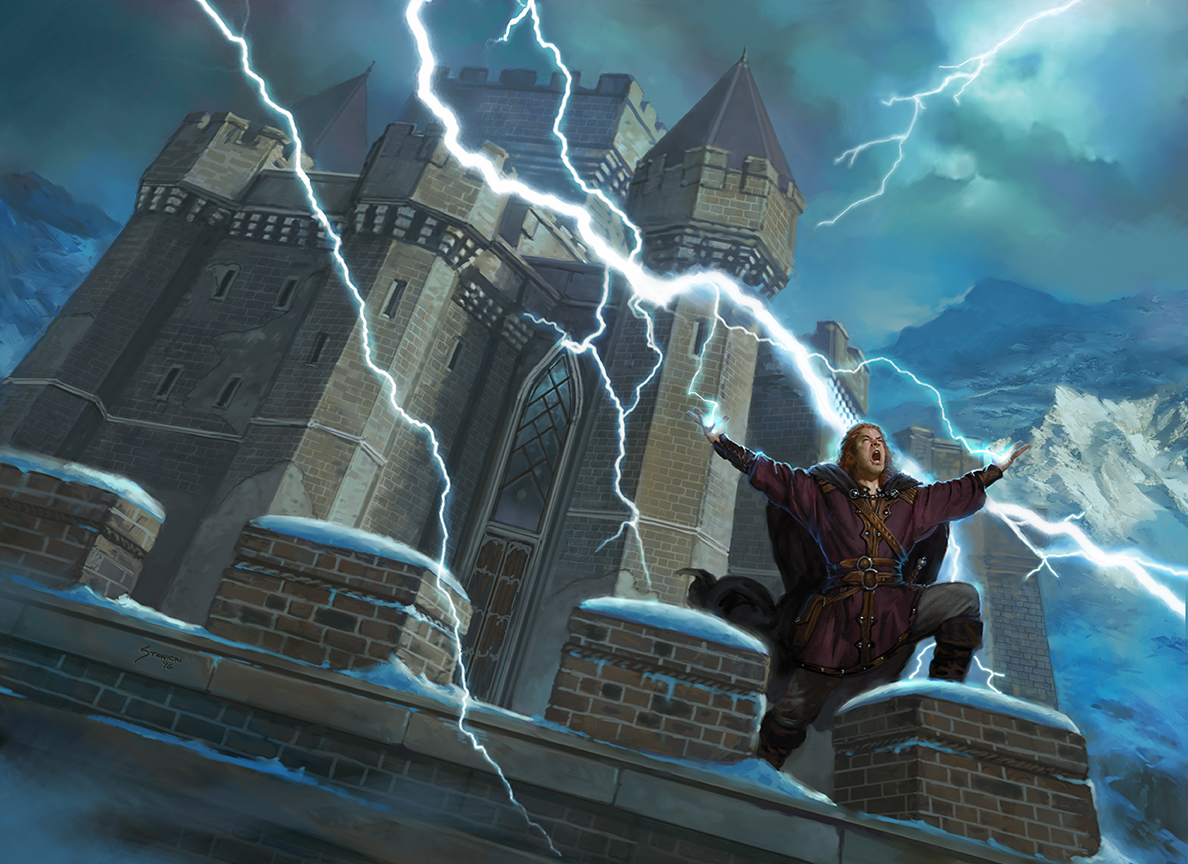
Today, we'll be interviewing Matt Stawicki.

(Taken from Matt's biography)


From superhero comics to Star Wars to the paintings of Frank Frazetta,
Matt has always had an interest in fantasy. 

The aesthetic of his art is greatly influenced by the Golden Age of Illustration. Howard Pyle, N.C. Wyeth, Norman Rockwell and Maxfield Parrish are among his traditional influences. Although Matt is a traditionally trained painter he was also an early user of digital methods to create his art.
In recent years he has created a balance and works fluidly utilizing both techniques in has work. 

Born and raised in Wilmington, Delaware. Matt was always drawn to the arts.
An independent child he spent many hours entertaining himself by sketching and drawing.
In his teens he also developed a love for music and started playing guitar. 

He graduated from the Pennsylvania School of Art and Design in 1991. In the year following he studied under the guidance of noted western painter Ken Laager, who further reinforced the Brandywine Schools approach. Since beginning his professional career in 1992, he has created
many images for a wide range of products including book covers, video game covers,
collectible card images, CD cover art, collectors plates and many other fantasy products. 

Matts work in publishing has been on the book covers of many of todays finest fantasy and
science fiction authors, who include, (in no particular order) Margaret Weis and Tracy Hickman, Dave Duncan, Julie Czerneda, Ed Greenwood and L.E. Modesitt Jr. 

The first collection of this award-winning artists work, The Art of Matthew Stawicki, was published in 2002 by Cartouche Press. Matt's work has also been showcased in
The Masters of Dragonlance Art and Dragon Art published by Flame Tree Publishing among others. 

Select clients include, Daw Books, Tor Books and Time/Warner Books, Other clients include Monte Cook Games, Milton-Bradley, Hasbro, Wizards of the Coast, Vivendi Games,
The Franklin Mint and The Bradford Exchange. 

Matt’s work has been exhibited at The Society of Illustrators in New York,
The Allentown Art Museum and The Delaware Art Museum.
His art can also be seen at various pop culture conventions such as DragonCon,
GenCon and IlluxCon. 

When not painting Matt enjoys playing guitar and wood working.
He currently resides in Delaware with his wife Cathy.

Kaminski: With your background of works - mainly delving into the fantastic art realm - what drew you to this genre? Was fantasy something that was always particularly appealing to you?


Stawicki: I think my earliest influence and interest in fantasy would probably go back to when I as kid. I loved superheroes, and still do! The Superfriends on Saturday morning were a weekly event and a must see. Drawing from comics is probably the earliest ‘fantasy art’ that I created. Also Disney movies. Sleeping Beauty is a standout for me because of the wonderful dragon that Maleficent becomes. In fact that scene would later be a huge influence on my painting ‘Dragons Lair’. On to movies like the Wizard of Oz, which was on TV only once a year and was an instant favorite. And then, wait for it … Star Wars! If I didn’t love imaginative stories and characters before, this drove in the last nail. I was hooked.

Kaminski: Oh, how interesting! I've been openly influenced by RPGs such as Dungeons and Dragons and ShadowRun. I've even went so far as to make a very bold proclamation about how much Baldur's Gate attributed to my love of portraiture. When we all start out I think that we draw what we know first - so I would assume that's what got your first steps into this crazy art world.

When you first started out, what would you say gave you that ultimate 'moment of clarity'? What made you go from simple hobbyist to full-blown professional?

Stawicki: I think I knew in high school that I was going to go for career in art. I didn’t know at that point exactly what that meant. I knew I could draw pretty well and liked to draw realistically. I liked the art on some the album covers that had fantasy oriented subjects. Specifically, the covers done by Ken Kelly for Kiss were great as well as the covers by Derek Riggs for Iron Maiden. There were others but these stand out to me as a ‘ I would love to do this’ kind of moment. At that point I still really wasn’t aware of the professional market, just that someone drew or painted these.

Then, when I was in college a friend gave a Boris Vallejo calendar. I was just blown away by it and the more I looked into Boris I realized there was a real market for this type of work.

Kaminski: It seems like your style was already somewhat pre-established, what with your influences revolving around realistic fantasy and sci-fi fare. And with your influences, I think you stand up on your own right with them!

Switching gears: your media fluidity (what with the current 'Media Wars' that seem to plague art schools as of late - Traditional artists vs. Digital artists) seem to be something of particular note. If you had to choose on in particular to mark out as your favorite, which would it be, and why?


Stawicki: I guess I would have to say that in a perfect world, everything would be an oil painting. However, for me the painting process is a pretty slow one. This not only made it tougher for me to make a living, because you are being paid by the job, but it also meant doing less art. I love painting but the simple fact is, going digital speeds everything up.

I started working with Photoshop and Painter in ’97. I had been painting in oil exclusively for the first six or seven years, so when I started working digitally my goal was to make it look like an oil painting. The aesthetic I was after didn’t change. I was able to do more work and in the process learn more simply because I was able to produce more. Now I use both. The digital allows me to take jobs that I may not be able to paint within the clients timeline. I also do almost all my preliminary work digitally now because of it’s boundless flexibility.

Kaminski: It's actually pretty amazing how much our approach to digital art parallels, because my reasons are almost exactly the same. With the one addendum being the space limitation. I haven't been able to approach much by way of oil painting because of the space required for a larger oil painting to dry. Not only that, but it's impossible to let a painting dry when you have the small toe-beans of cats lurking around.

I would assume that your ability to switch between medias helped a great deal when choosing which clients to shop for. When you were initially digging your heels into the ground in you career, what kinds of approaches did you use to gain a following or clientele?


Stawicki: Ok, let me see if I can make a long story, short.

When I was in my senior year of college, I did an internship with Western/Historical painter Ken Laager who was doing mostly book cover work at the time. After a successful internship and graduating, I assisted Ken on and off for the next year all the while working on sample book cover paintings of my own. It was under his tutelage that I really started to refine my painting technique and my book cover portfolio. In time, Ken introduced me to his artist rep Sal Barracca, who took me on. Sal really knew the market and had a great reputation, especially as a fantasy book cover rep. He also had an interest in helping to develop new talent, which was/is unheard of from an artist rep. He was representing or had rep-ed several artists that I admired. In no particular order, Daniel Horne, who had also been an understudy of Ken’s at one point, Keith Parkinson, who had just left the agency to head out on his own and Tim Jacobus, who for many years did all the Goosebumps art, are all of note. In addition to myself, he took on several other young artists around the same time (’92-ish). Among them some young guy named Donato, who blew us all away! (I wonder what happened to that guy) Slowly, I started doing book cover work. I would say Sal was a big help in securing and guiding some of my earliest professional work.

Kaminski: Good god man! That's quite the roster to be along side of! You were definitely in better company than most anyone I know of in terms of breaking your teeth in the industry. I'd assume that being around that talent not only pushed you above and beyond, but most likely pushed you to challenge them consistently. Another interesting thing to note here is that most of them were primarily illustrators for book covers and game covers (again, all in the fantasy and sci-fi genre). It's no wonder that you pushed into the same direction!

I'm sure you're always under some sort of non-disclosure agreement (NDA), but that being said, do you have any personal projects or recently released projects that you'd like to talk about or promote?


Stawicki: I usually seem to have a book cover or two floating around most of the time, as well as contributing to worlds of Monte Cook Games on a regular basis. In the last few years I have doing more and more private commission work. I do have a few bigger Stawicki projects on the horizon, but what I can say now is that I will be releasing my 2018 Fantasy Calendar soon on Kickstarter!

Follow me on Facebook for the latest on those projects.

Kaminski: I'm sure you consistently work on a TON of projects in tandem - client-based or otherwise. In that vein, do you have any advice on juggling personal work on top of commissioned work, or even just a multitude of projects at the same time?

Stawicki: There is definitely a certain amount of multi-tasking you have to get used to in this business. It is crucial that you be on time if you are going to illustrate. What is important to remember is that your art is not the final product. There are other people and schedules that are all depending on each other to get the job done…and done on time! Someone told me once that, the best painting in the world isn’t worth much if it’s not there when the client needs it. So to that end, I would say try and judge your time fairly. I would suggest even trying to build in a ‘little time cushion’, in case things take longer than you think… and they almost always do.

As far as, doing ‘personal work’ goes, what I would say is, personal work for me usually fills some kind of void that illustration can’t or won’t fill. In my early career I did personal pieces to showcase things that I wanted to do, but maybe wasn’t getting the chance to in the projects I was getting. This was because my portfolio did not include it. In illustration, most of the time, you need to show a client that you are skilled at a certain subject before they will hire you. A client is going to hire you for the work you are showing or doing well. So if there is something else you want do try your hand at, sometimes even a different approach with the same genre, you will need to do samples of it… remember a picture is worth a thousand words!

Personal work for me now is not as related to illustration. I try to take more chances with composition and I am more aware of things like brush work and technique. As I mentioned before, more and more of my work every year seems to be private commissions. In those cases the painting is the final product and will be hanging on someone’s wall, hopeful to be looked at and enjoyed up close and personal for years to come.

In short, I think doing personal work is important. It can be draining to always work on someone else’s project or ideas. I think everyone has things they want to get out. At this point, I try to work in one major personal piece a year. Notice I said ‘Try’. I also do smaller little studies and sketches, usually in acrylic, at the end or beginning of the day. They’re all not pretty, but they ARE fun!

Kaminski: 'A picture is worth a thousand words'... well played, sir, well played.

I've done quite a few projects myself that I would consider as my 'one-day' kind of projects, the bad thing is that I tend to use up my creative energy on them from time-to-time instead of focusing on the important commission or personal piece. Projects such as #junicorn, #robo-june, or even #inktober were ones that I did recently that really pushed above and beyond quickly. It seems that the more frequently you work, the more you find yourself with more ideas to work on even more! It's stupidly cyclical, but that's my take on it.

I'd say, because of this potential cyclical treatment, everyone seems to get burned out from time-to-time. When you feel uninspired, what are some methods you have to rekindle that art spark?


Stawicki: When my eyes roll back in my head and I just can’t take it anymore, I simply have to stop and do something else. I like wood working and tinkering on my house. I have also been playing guitar for many years and find that it is a great way for me to clear my head from the art scramble in my head.

Kaminski: Video games are my typical go-to. That and watching movies, of course. I'm an entertainment industry junky, what can I say.

What goals do you have for yourself in the immediate? What about the long-term?

Stawicki: As of this writing, my shot term goals are to put out the 2018 Stawicki Fantasy Calendar I mentioned. More long term (hopefully not too long), is the next art book, ‘The Art Of Matt Stawicki vol.2’.

Kaminski: And finally, what's the best piece of advice you've ever received OR what's the best piece of advice you can give to fellow artists?

Stawicki: Best advice? ”Don’t eat the yellow snow!” Just kidding, although it does seem like good advice!

I would say work with subjects that you love! Paint and draw what you love! This can be a challenging path, filled with plenty of self doubt. It takes a tremendous about of commitment to persevere and it is your passion for it that will keep you going.
Kaminski: Pretty damn sound, Matt. So, from one Matt to another - Thank you very much for a damn good interview!

Thank you all for reading, I hope you enjoyed this interview with Matt Stawicki.
If you did, please give it a SHARE via Facebook or Twitter, below.
You can view this interview, and many more, HERE.

You can find out more about Matt Stawicki, at his website: http://www.mattstawicki.com/

If you would like to be a part of my interview series, simply fill out the contact form HERE and I'll get back with you as soon as possible!

THANKS FOR READING, AND UNTIL NEXT TIME!

Follow Mat @artofmatk

Follow Ash @ashley.storyteller